
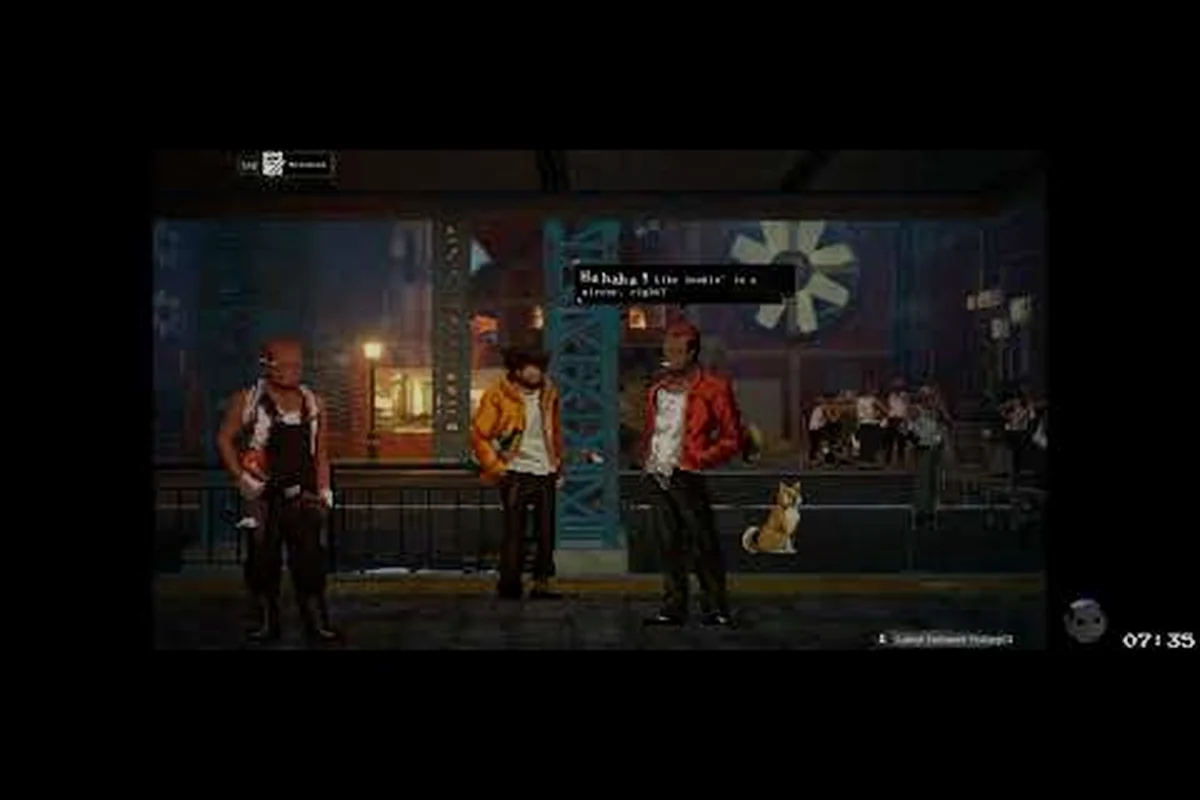
Dark Tide City is not a town that was broken in a single cataclysmic moment. The Kill The Shadow city fracture backstory is layered, deliberate, and rooted in the kind of political betrayal that lingers for generations. Set in the 2.5D pixel-noir detective RPG by Shadowlight, the world of Kill The Shadow places you in a coastal metropolis where the scars of a forgotten conflict have hardened into walls, districts, and laws. To understand protagonist Lucas, his companion The Shadow, and the chain of cases that drive the campaign, you first have to understand how the city itself came apart.
This guide walks through the historical, political, and supernatural forces that tore Dark Tide City in two, and shows how every clue pinned to your corkboard deduction board ties back to a single, terrible truth. Whether you are investigating the Pig Cage Walled City for the first time, retracing your steps with time rewind, or trying to decode Captain Wang's coded warnings, the fracture is the thread that holds everything together.
The Post-War Division That Shaped Dark Tide City
Before the war, Dark Tide City was a single, breathing harbor. Ships docked at what is now Shipwreck Wharf, families lived in the low tile-roof houses that ring the bay, and a civilian police force kept watch over a unified municipal charter. The conflict that ended that era is rarely named directly in in-game dialogue — newspapers refer to it as "the Adjustment," and survivors simply call it the war. Whatever it was called, its outcome split the city into territories governed by competing powers, and the line between them became the literal edge of the playable map in the early hours of the campaign.
Before the War: A Unified Harbor Metropolis
Historical archives you can inspect at the Shipwreck Wharf archive hall describe a city that was, by every measurable standard, prosperous. The harbor handled three-quarters of the regional shipping traffic. Civilian courts were independent, and the Pig Cage Walled City — now a militarized ghetto — was a popular arts district known for its street musicians and night markets. The original police charter, of which only fragments survive, makes no mention of any occupying force because none existed.
| Pre-War Dark Tide City | Post-Fracture Dark Tide City |
|---|---|
| Single civilian government | Rival military administration |
| Open harbor at Shipwreck Wharf | Restricted military dockyards |
| Free movement between districts | Checkpoints, walls, curfews |
| Independent press | Censored state broadcasts |
| Pig Cage as arts quarter | Pig Cage Walled City under martial law |
That table is more than flavor text. It is the factual backbone of the Kill The Shadow city fracture backstory. Every witness statement, every coded letter, every dead-end alley in Pig Cage Walled City only makes sense when measured against the city's pre-war self.
After the Fracture: Three Districts, Three Laws
| Zone | Governing Power | Civilian Access | Key Story Relevance | Lucas's Status |
|---|---|---|---|---|
| Northern Plateau | Nominal civilian government | Free movement | Dialogue-driven case origins | Lives here; corkboard wall |
| Shipwreck Wharf | Direct military control | Restricted; checkpoint required | Smuggling operations, Captain Wang's jurisdiction | Investigates under Wang's watch |
| Pig Cage Walled City | Martial law; sealed behind concrete | Curfew enforced | State disappearances, Kiki's network | Must use Shadow to enter safely |
The post-war settlement carved Dark Tide City into three operational zones. The northern plateau, where Lucas keeps his apartment and the corkboard deduction wall, became the nominal civilian capital and is where most of the dialogue-driven cases begin. The harbor at Shipwreck Wharf fell under direct military control, ostensibly to keep logistics moving but in practice to monitor everything that came in or out. And the Pig Cage Walled City, sealed off behind concrete and razor wire, became the place where the state could disappear people without paperwork.
Lucas's Origin in a Fractured Metropolis
Lucas was not a revolutionary when the war ended. He was a junior officer in the civilian police, recently engaged, with a future measured in promotions rather than headlines. The fracture took that script and shredded it. His fiancée vanished in the chaos of the partition, and the force he served was absorbed, piece by piece, into a militarized constabulary that answered to a new chain of command. Lucas resigned, refused the new badge, and started working the cases nobody else would touch.
The Conspiracy That Ties Every Case Together
What makes the Kill The Shadow city fracture backstory more than a setting is that it is structurally embedded in the case design. Each case you take on the corkboard is presented as a discrete murder, kidnapping, or smuggling job, but as you pin photographs, witness slips, and recovered documents together, the same names keep appearing: shell companies registered at Shipwreck Wharf, surveillance reports filed from Pig Cage, and a handful of state-issued authorization codes that only Captain Wang's division was supposed to know.
The conspiracy is not a single villain. It is a system that was built to keep the fracture in place, and every case is a brick in its foundation. The game rewards you for noticing that the names, dates, and codes line up across otherwise unrelated files, and the time rewind system gives you the literal ability to revisit crime scenes and catch details you missed the first time. If you want a deeper dive into Lucas's personal timeline and how his resignation cascaded into the cases he now takes, see our full [/en/story/lucas-backstory-explained] breakdown.
The Shadow Entity and the Reading of Dead Memories
The supernatural pillar of the story is The Shadow, a being that has attached itself to Lucas for reasons the game only hints at early on. Mechanically, The Shadow lets Lucas walk the memories of the recently dead, reconstructing final scenes from impressions left in the air. Narratively, it makes him a perfect witness to the fracture: the dead are the only population that has nothing left to lose by telling the truth.
How The Shadow Reads the City's Dead
Every body in Kill The Shadow carries the residue of the city's history. A dockworker killed at Shipwreck Wharf will replay a memory of pre-war freight schedules. A journalist gunned down at the edge of Pig Cage Walled City will replay the moment the first checkpoint closed. As Lucas moves through the campaign, The Shadow's readings accumulate into a kind of civic archive that no surviving institution is willing to keep.
For players who want a complete tour of the geography these readings take place in, our [/en/locations/dark-tide-city-guide] covers every neighborhood, including the districts you only access through memory. If you want a focused look at the three zones themselves, see the [/en/locations/dark-tide-city-districts] page for a district-by-district breakdown.
Captain Wang, Kiki, Teddy, and the Web of the Fracture
No backstory in Kill The Shadow is told through archives alone. The living characters are the machinery that keeps the fracture running, and the three most important ones orbit Lucas from the first case to the final revelation.
Captain Wang is the officer who took Lucas's resignation and never stopped watching him. He is technically an ally of the investigation, but every piece of evidence he hands over has been sanitized for chain-of-command reasons. Kiki is a runner who moves messages, evidence, and people through the gaps in the Pig Cage wall — she knows the fracture from the bottom and trusts almost no one above it. Teddy is the civilian fixer who funds Lucas's independent work, posts his corkboard, and runs interference with the dock authorities at Shipwreck Wharf. The three of them do not agree on anything, which is exactly what makes their network function.
| Character | Role in the Fracture | Relationship to Lucas |
|---|---|---|
| Captain Wang | State-appointed gatekeeper of evidence | Wary semi-ally, former superior |
| Kiki | Smuggler and witness through Pig Cage wall | Trusted source, occasional partner |
| Teddy | Civilian patron and logistical cover | Employer, friend, target |
| The Shadow | Supernatural reader of the dead | Constant companion, motive unclear |
Together, these four form the lattice through which the city fracture backstory is delivered to the player. If you are still learning how these relationships play out mechanically — and how Strength, Spirit, and Charm builds change what each of them will tell you — our Lucas build overview walks through the dialogue and skill checks tied to each encounter.
Pig Cage Walled City and Shipwreck Wharf: Geography of Grief
The two locations that anchor the fracture are Pig Cage Walled City and Shipwreck Wharf, and the game spends more time on their textures than on any other map. Pig Cage is dense, vertical, and saturated with the kind of detail that only appears when a place has been sealed off and left to ferment. The alleys are stacked with laundry lines, listening posts, and improvised shrines. Every conversation there is potentially a checkpoint checkpoint, which is why time rewind is most often used in Pig Cage: you will replay the same three-minute sequence four or five times to catch a passing uniform, a whispered code, or a shadow that does not belong.
Shipwreck Wharf, by contrast, is wide and flat and loud. It is where the old harbor was, where the new military dockyards are, and where almost every smuggling case has a thread to pull. The fracture is visible there as barbed wire and signage rather than walls, and Captain Wang's jurisdiction is the one that patrols it. Together with the civilian plateau, these three zones form the complete map of the city fracture backstory, and your corkboard will fill with pinned location markers before the campaign is half over.
Corkboard Deduction, Time Rewind, and Uncovering the Truth
The mechanical language of the game mirrors its thematic one. The corkboard deduction board is literally a wall in Lucas's apartment onto which he pins photographs, notes, and string, and the act of pinning them is what lets the system "see" the connection you are drawing. Time rewind is the gameplay loop: any scene can be rewound to an earlier node, retried with the new piece of evidence in hand, and replayed forward again.
Both systems are the in-fiction stand-in for the same investigative work that the city fracture backstory demands. You cannot resolve the central conspiracy by storming a single fortress; you have to read what The Shadow shows you from the dead, share it with Kiki through the wall, route it past Captain Wang's censorship, and then pin it to the corkboard next to the documents Teddy smuggles in from the wharf. The three systems together — memory, network, and board — are how a fractured city is reassembled, one clue at a time.
If you want to keep digging into the setting after this article, the official developer page for Shadowlight's Kill The Shadow lives at shadowlight.games/kill-the-shadow, where they post art updates, soundtrack samples, and the occasional timeline clarification that the in-game newspapers only hint at.
For more details, check out our Lucas Backstory Explained guide.
For more details, check out our Dark Tide City Guide guide.
For more details, check out our Dark Tide City Districts guide.
City Fracture FAQ
What started the war that fractured Dark Tide City?
The in-game sources never name the opposing side or the trigger event directly, but recovered newspapers and The Shadow's memory readings point to a multi-year regional conflict over harbor access and political alignment. The war's end was negotiated, not won, and the partition of the city was the price of the ceasefire.
Why is Lucas personally invested in the city fracture?
Lucas's fiancée disappeared during the partition, and the official investigation was closed within days. Refusing to accept that closure is what drove him out of the police and into independent casework, and almost every case he takes now traces back, directly or indirectly, to the same chain of decisions made during the war's final week.
How does The Shadow fit into the historical conspiracy?
The Shadow appears to have been bound — or perhaps attracted — to Dark Tide City during the war itself, and its readings are concentrated on casualties from the fracture. The deeper Lucas digs, the more the entity seems to be both witness and participant, which is why its motives are treated as a separate thread in the larger conspiracy.
What role does Captain Wang actually play in the cover-up?
Captain Wang is not the architect of the conspiracy, but he is the officer responsible for keeping its paperwork clean. He hands Lucas sanitized evidence because anything else would end his career, and his arc in the late game turns on whether he decides that protecting the system is worth more than the truth.
Where should a new player go next to learn the setting?
Start with the [/en/locations/dark-tide-city-guide] for the geography, then read [/en/story/lucas-backstory-explained] for the personal timeline, and finish with [/en/locations/dark-tide-city-districts] for the district-by-district breakdown that ties the two together.