
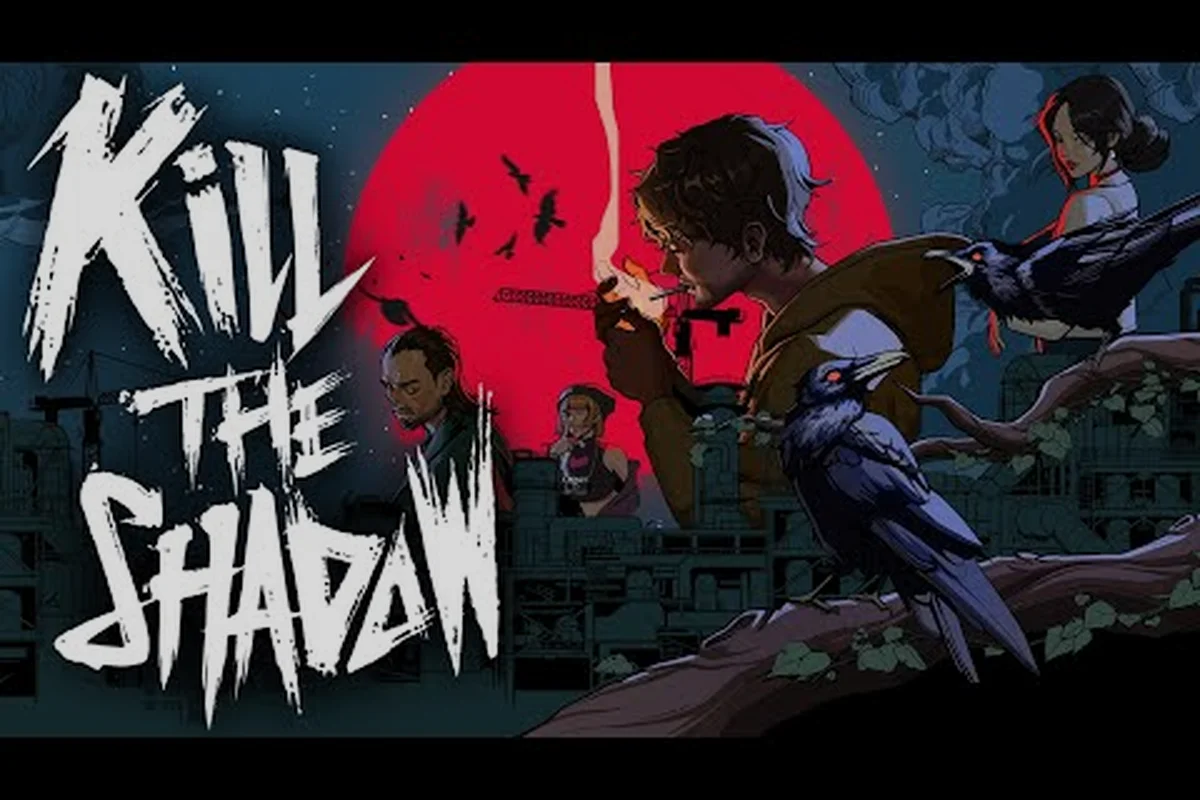
The Fractured Origins of Dark Tide City
The entire narrative spine of Kill The Shadow rests on the broken history of Dark Tide City, a sprawling coastal metropolis whose post-war wounds never healed. Shadowlight, the Shanghai-based indie studio behind this 2.5D pixel-noir detective RPG, deliberately constructs its fictional city as a character in its own right. The game opens with Lucas, also known by his Cantonese nickname Ah Guang, returning to a place he once swore to protect as a police officer. What he finds is not the unified harbor town of his memories, but a fractured urban landscape scarred by occupation, factional conflict, and unanswered crimes.
Dark Tide City was never a quiet place. Its pre-war identity revolved around shipping lanes, smuggling corridors, and a port economy that funneled wealth through corrupt officials and underground syndicates. When the war ended, the victors did not restore order so much as redraw the map. The metropolis was cleaved into competing zones of influence, each controlled by a different authority with its own laws, enforcers, and secrets. This division is the invisible architecture underneath every case Lucas investigates throughout the campaign.
Players experience this fractured history through environmental storytelling, dialogue with key witnesses like Captain Wang and informants such as Kiki, and the corkboard deduction system that lets you pin evidence to a wall and connect threads with red string. Every fragment of the city's divided past becomes a potential clue, and ignoring the historical context often leaves deductions incomplete.
The Pre-War Era of Dark Tide City
Before the division, Dark Tide City was a single administrative unit governed by a civilian council that tolerated corruption in exchange for stability. Port revenues funded public works, and the police force — including Lucas before his resignation — operated under a chain of command that, while imperfect, was at least unified. The war shattered that structure almost overnight when foreign military forces landed at the harbor and established checkpoints in the Shipwreck Wharf district.
Post-War Division: How the City Split Apart
The post-war partition of Dark Tide City is the single most important piece of lore in Kill The Shadow, and understanding it is essential for any player who wants to untangle the game's central conspiracy. Following the armistice, the occupying powers refused to demobilize. Instead, they carved the city into occupation zones, each patrolled by a different military contingent. The civilian government collapsed within months, replaced by a patchwork of local strongmen, foreign garrisons, and criminal enterprises that filled the vacuum.
The visible result is a city split along several fault lines. The Old Town District remains nominally under local control but is effectively policed by private militias. Pig Cage Walled City operates as a semi-autonomous enclave, walled off after a series of riots and left to govern itself under the shadow of organized crime. Shipwreck Wharf is dominated by foreign troops who treat the docks as their sovereign territory. Each district has its own court system, its own black market, and its own buried atrocities.
Lucas navigates this patchwork while carrying The Shadow on his back, a parasitic entity bonded to him after an incident he rarely discusses. The Shadow reconstructs the final moments of the dead, granting him access to a time rewind mechanic that lets him revisit crime scenes moments before tragedy struck. The divided city history shapes what those reconstructions reveal, because every murder, disappearance, and cover-up is rooted in the politics of the partition.
Reading Memories of the Fallen
The memory reconstruction scenes are where divided city history comes alive. When Lucas enters the final moments of a victim, the environment shifts to reflect the moment just before the war ended, or just after a new occupation began, depending on the case. Players who pay attention to environmental cues — old propaganda posters, military checkpoints, currency changes — gain deduction bonuses that reward historical literacy.
Military Occupation and the Power Vacuum
The military occupation that followed the war created a cascading series of power vacuums that no single faction has ever fully filled. In Dark Tide City, the foreign troops who control the port treat their sector as conquered territory, answerable only to a distant command structure. Local police forces, including the remnants of the department Lucas once served, became deputized enforcers for the occupiers, or else were absorbed into private security for one of the city's criminal patrons.
This is the political climate that birthed the conspiracy running beneath every case in the game. According to the GamingBolt story interview with Shadowlight's development team, the creators designed the conspiracy as a literal web of historical grievances, corruption deals, and silenced witnesses stretching back to the first day of the occupation. Players who only follow the surface-level clues will solve individual murders but miss the connective tissue linking them.
| Faction | Zone of Control | Primary Interest | Relationship to Lucas |
|---|---|---|---|
| Foreign Military | Shipwreck Wharf | Port revenue, strategic depth | Hostile, treats him as civilian |
| Local Police Remnants | Old Town District | Order, internal discipline | Former colleagues, now suspicious |
| Criminal Syndicates | Pig Cage Walled City | Smuggling, enforcement rackets | Recruit him, threaten him, or both |
| Civilian Council | Scattered districts | Restoration of pre-war order | Idealistic, but powerless |
Key Factions After the Division
Understanding these factions is critical because your dialogue choices — and the Strength, Spirit, or Charm build you develop — determine which faction will cooperate with Lucas at each stage. A Strength approach leans on intimidation and physical leverage, often forcing cooperation from criminal elements. Spirit opens psychic channels, useful for interrogating traumatized witnesses whose memories have been sealed. Charm unlocks persuasion options that appeal to the civilian council and sympathetic officers.
The Conspiracy Web Connecting Every Case
The genius of the divided city history in Kill The Shadow is that it transforms what could have been a string of disconnected murder cases into a single sprawling political thriller. Every crime Lucas investigates is, in some way, a consequence of the post-war partition. A gangland killing in Pig Cage Walled City ties back to a smuggling contract negotiated during the occupation. A suicide in the Old Town District masks an execution ordered by a foreign officer trying to silence a witness. A missing persons case in Shipwreck Wharf connects to a buried mass grave from the first week of the war.
To track these connections, the game offers the corkboard deduction system, a visual interface where Lucas can pin notes, photographs, and reconstructed memories to a wall and draw lines between related evidence. Players who invest time in this system are rewarded with breakthroughs that pure clue-gathering cannot unlock. Ignoring the system means missing entire layers of the conspiracy, and potentially locking yourself into a premature ending.
The shadow organization at the heart of the conspiracy is never given a simple name, but its fingerprints appear on every major case. Its members include compromised officials, military officers, and at least one figure from Lucas's past life as a police officer. The deeper you dig, the more you realize that the divided city itself was, in some sense, the conspiracy's first crime.
Lucas, The Shadow, and the Search for Truth
Lucas, or Ah Guang as his late fiancée used to call him, is not merely investigating the divided city history out of professional obligation. He is searching for answers about his own past. His fiancée vanished during the early chaos of the occupation, and his resignation from the force followed a violent incident that bonded him to The Shadow, the entity that now rides his back and whispers in his mind.
According to the TechTimes feature on Shadowlight, the developers conceived of The Shadow as both a gift and a curse. It grants Lucas access to the dead's final moments via time rewind, but it also feeds on his life force and threatens to consume him if he overextends. This tension powers much of the personal drama, because every time he uses the entity's power to reconstruct a memory, he risks losing more of himself.
His relationship with key allies shapes how much of the divided city history he can uncover. Captain Wang, his former superior, knows where the official records are buried but refuses to share them without proof of Lucas's integrity. Kiki, an underground journalist in Pig Cage Walled City, trades information for favors and is essential for uncovering the criminal side of the conspiracy. Teddy, also called Wangcai, runs an information brokerage in Zhulong Walled City and is the only character who can confirm certain rumors about the war's final days.
Ability Paths and Historical Choices
The three ability paths in Kill The Shadow are not just mechanical builds; they represent philosophical approaches to uncovering divided city history.
| Ability Path | Investigation Style | Best For | Historical Strength |
|---|---|---|---|
| Strength | Physical pressure, intimidation, breaking down doors | Confronting hostile witnesses, raiding syndicate safehouses | Forcing collaboration from those complicit in war crimes |
| Spirit | Mind games, psychic links, memory dives | Recovering sealed memories, interrogating traumatized victims | Accessing repressed historical truths directly |
| Charm | Persuasion, empathy, social engineering | Building trust with civilians, negotiating between factions | Piecing together oral histories and civilian testimony |
Players can mix abilities, but each major case favors one approach, and the divided city history rewards players who adapt to the political climate of each district before charging in.
How Divided City History Shapes Gameplay
The historical context of Dark Tide City is not flavor text tucked into codex entries. It actively shapes moment-to-moment gameplay in Kill The Shadow. The districts you visit dictate which factions you can approach, which witnesses will speak freely, and which time rewind reconstructions are even possible. A case in Shipwreck Wharf may be impossible to crack with Spirit alone, because the victims died in occupied territory and their final moments are guarded by foreign military encryption. The same case may yield nothing under Charm if your reputation with the local police has collapsed.
Reputation is tracked implicitly across the campaign. Help Captain Wang early, and the Old Town District becomes more cooperative. Betray the civilian council, and Kiki becomes your only reliable source in the walled enclaves. Side with the syndicates in Pig Cage Walled City, and Teddy may refuse to deal with you until you prove you can be trusted. Every choice compounds, and the district guide provides additional context on how each zone responds to your investigative style.
Multiple Endings and the City's Fate
The culmination of the divided city history arc arrives at one of three possible endings, each determined by your accumulated choices, your primary ability build, and your relationship with the mastermind behind the conspiracy. The kill ending is the most direct resolution and reflects a Strength-heavy playthrough. The judge ending requires Spirit investment and a willingness to weigh the conspiracy's architects against a moral ledger. The kiss ending, paradoxically, demands Charm and a willingness to forge reconciliation with someone who orchestrated immense suffering. None of these endings erase the divided city's wounds, but each offers a different vision of what Dark Tide City might become.
Major Districts of the Fractured Metropolis
Exploring the divided city is impossible without a working knowledge of its major districts, because each one embodies a different facet of the post-war history. The Dark Tide City overview covers the broader geography, but the districts deserve individual attention.
Old Town District is the closest thing to a civilian-governed area, though its police force operates under the watchful eye of foreign advisors. It houses archives, civic records, and the police department where Lucas once served. Cases here tend to involve official corruption and cover-ups stretching back to the first days of the occupation.
Shipwreck Wharf is the foreign military's stronghold, built around the harbor that gives the city its name. Access is tightly controlled, and many crimes here are committed by or against occupation troops. Memory reconstructions in this district are often guarded by military encryption that only Spirit can bypass.
Pig Cage Walled City is the most dangerous district to navigate and the richest source of criminal lore. It is essentially a fortress within the city, populated by syndicates and the civilians who depend on them. Kiki operates here, and most of the smuggling-related case threads converge on its narrow alleys.
Zhulong Walled City is the oldest surviving district, with architecture that predates the war by centuries. Teddy runs his information network here, and the district contains records that predate the partition entirely. Some of the most important revelations about the divided city history are hidden in Zhulong's archives, accessible only through careful Charm work or trade.
| District | Controlling Faction | Historical Layer | Key Character |
|---|---|---|---|
| Old Town District | Local police remnants | Post-war cover-ups | Captain Wang |
| Shipwreck Wharf | Foreign military | Occupation crimes | Foreign officers |
| Pig Cage Walled City | Criminal syndicates | Smuggling history | Kiki |
| Zhulong Walled City | Independent brokers | Pre-war records | Teddy (Wangcai) |
| Harbor Fringe | Contested, mixed | Wartime landing sites | Various witnesses |
Reading the City as a Detective
The best investigators in Kill The Shadow treat the divided city itself as a witness. Posters, currency exchange rates, propaganda slogans, and graffiti all shift depending on which district you are in and what year the case is set in. Players who tune into these details will notice when evidence contradicts the official district narrative, which is often the first step toward cracking a case through the corkboard deduction system.
Divided City History FAQ
What is the divided city in Kill The Shadow?
The divided city refers to Dark Tide City, the fictional metropolis where the game is set. After a war, foreign occupying forces carved the city into separate zones, each controlled by a different faction with its own laws and enforcers. This partition is the political and historical backdrop for every case Lucas investigates during the campaign.
Why is Dark Tide City divided in Kill The Shadow?
The division resulted from a post-war military occupation that never formally ended. Victorious foreign powers established checkpoints at the harbor and refused to relinquish control, leaving local institutions to collapse or be co-opted. Criminal syndicates and private militias filled the gaps, producing the fractured political landscape that defines the game's setting.
How does the divided city history affect the story?
The divided city history is not just background lore; it directly drives the central conspiracy. Every murder, disappearance, and cover-up Lucas investigates is rooted in the politics of the partition. Players who understand the historical grievances between factions unlock more deductions and access deeper layers of the case web.
Who controls the divided districts of Dark Tide City?
Control is split between the foreign military in Shipwreck Wharf, the local police remnants in the Old Town District, criminal syndicates in Pig Cage Walled City, and independent brokers in Zhulong Walled City. Each faction has its own agenda, and Lucas must navigate between them carefully using Strength, Spirit, or Charm approaches.
Does the divided city history change the ending?
Yes, the historical choices you make and the factions you side with directly influence which of the three endings you can reach. A Strength-heavy run favors the kill ending, Spirit investment unlocks the judge ending, and a Charm-focused playthrough enables the kiss ending. Your reputation across all districts compounds toward the final confrontation with the mastermind.