
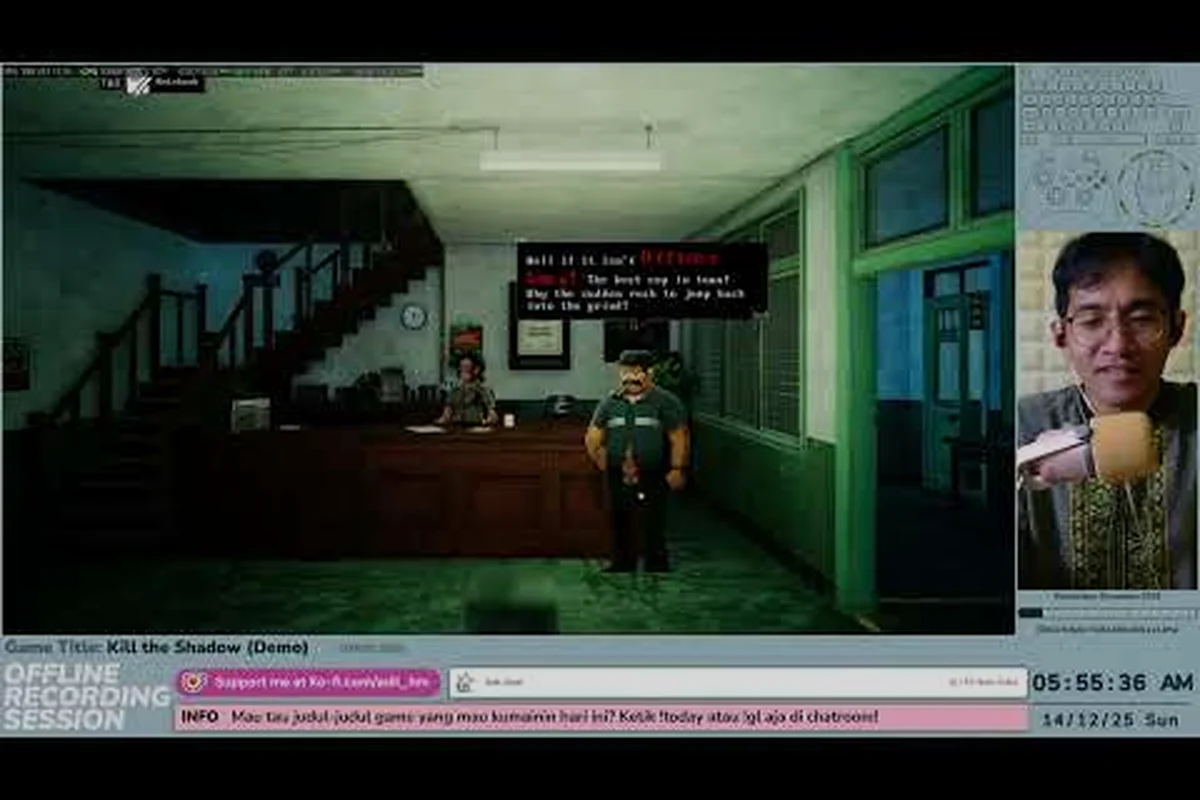
Understanding the Interrogation System in Kill The Shadow
Lucas, the disgraced former cop turned private detective, doesn't rely on a badge or a gun during his investigations across Dark Tide City. Instead, he carries The Shadow — a parasitic entity fused to his soul that reconstructs the final moments of the dead. When Lucas walks into an interrogation room, he isn't just another gumshoe fishing for confessions. He's carrying supernatural evidence that no suspect can outrun, paired with three distinct psychological approaches that determine whether a culprit confesses, cracks, or calmly walks away.
The interrogation system in Kill The Shadow is built around layered dialogue trees, stat-based pressure, and the corkboard deduction mechanic. Every question you ask, every piece of evidence you flash, and every emotional lever you pull feeds into a hidden tension meter that shapes how a scene ends. Players rushing through dialogue usually miss the real depth: the developer at Shadowlight designed these encounters as miniature puzzles, not button-mashing dialogue sequences.
How Interrogations Work Mechanically
Each interrogation opens with a phase called Cold Read. Lucas observes the suspect, and the game pre-loads a set of behavioral tells — eye contact, fidgeting, vocal pitch — that hint at hidden agendas. Pressing the right prompt during this phase boosts your opening stance. Skip it, and suspects go on the defensive immediately.
Once dialogue begins, you cycle through three core action types:
-
Press: Aggressive questioning tied to your active ability path.
-
Probe: Evidence-based questioning fueled by corkboard deduction threads.
-
Pivot: Social maneuvers like offering leniency, lies, or empathy.
Each action shifts the suspect's Composure meter. Crack composure fully and you trigger a confession or a critical clue. Push too hard without evidence and the suspect shuts down, forcing you to restart the encounter from the case file.
Why Interrogations Matter Across the Campaign
Interrogations aren't flavor text in Kill The Shadow walkthrough planning. They directly determine which ending you can pursue. The three ending categories — kill, judge, or kiss the mastermind — are locked behind accumulated interrogation outcomes. Kill-leaning outcomes require sustained aggression, judge outcomes reward methodical neutrality, and kiss outcomes demand repeated acts of empathy throughout the campaign.
Side cases also branch off interrogation results. A suspect you fail to crack in Act 1 may refuse to cooperate in Act 3, locking you out of an entire quest chain. This is why Dark Tide City veterans treat every suspect as a long-term investment.
The Three Ability Paths and Their Interrogation Styles
Shadowlight built Kill The Shadow around three ability paths that fundamentally change how Lucas handles suspects. These aren't cosmetic flavor — they rewire dialogue options, unlock exclusive intimidation tools, and determine which NPC archetypes you can break most efficiently.
Strength Build Interrogation Pressure
The Strength build turns Lucas into a wall of muscle and menace. During interrogations, Strength-aligned options lean on physical dominance: slamming tables, blocking exits, and invoking past violence. This path works best against low-Composure suspects like street-level thugs, corrupt beat cops, and the corporate enforcers who patrol Dark Tide City's neon-soaked warehouses.
Strength also unlocks a unique move called Shatter Silence, where Lucas physically destroys an item the suspect is clinging to, forcing an immediate composure check. The drawback is high visibility — every Strength outburst raises the city's underground Heat meter, attracting unwanted attention from rival fixers.
Spirit Build Mind Games
The Spirit build is the cognitive assassin of the three. Spirit dialogue options manipulate perception, plant false memories, and weaponize The Shadow's ability to replay final moments. A Spirit-aligned Lucas can show a murder victim rising from the dead inside the suspect's mind, or whisper reconstructed dialogue the suspect believed was secret.
This build excels against high-intellect targets: corporate executives, corrupt judges, and Dark Tide City's elite fixer class. Spirit interrogators rarely slam tables, but they consistently walk away with the most complete confessions because they let the suspect defeat themselves mentally. The tradeoff is resource cost — Spirit techniques drain Lucas's sanity gauge, and overuse can trigger a Shadow backlash mid-interrogation.
Charm Build Persuasion Tactics
The Charm build is the smoothest path through any interrogation room. Charm dialogue relies on rapport, emotional mirroring, and selective truth-telling. Lucas becomes the confidant suspects never realized they needed, drawing out confessions through empathy, bribery offers, and carefully placed flattery.
Charm works brilliantly on witnesses who fear retaliation, double-agents playing both sides, and high-society targets immune to brute force. Charm-exclusive moves like Velvet Promise let Lucas offer genuine protection in exchange for testimony — a tactic that builds long-term allies across Dark Tide City.
The downside is opportunity cost. Charm rarely produces dramatic immediate confessions, so players chasing quick results often abandon the build prematurely.
Comparing the Three Paths
The table below summarizes how each ability path performs during standard interrogations:
| Ability Path | Best Targets | Core Tactic | Main Drawback | Ending Affinity |
|---|---|---|---|---|
| Strength | Thugs, enforcers, low-Composure suspects | Physical pressure, intimidation, item destruction | Raises Heat meter, alerts rival gangs | Kill endings |
| Spirit | Executives, judges, intellectual suspects | Mind games, memory manipulation, Shadow replays | Drains Lucas sanity, risk of backlash | Judge endings |
| Charm | Witnesses, double-agents, social elites | Empathy, rapport, protection offers | Slow payoff, fewer dramatic breaks | Kiss endings |
Mastering the Corkboard Deduction System Mid-Interrogation
The corkboard deduction system is the connective tissue between investigation and interrogation. Every thread you pin on the board in your apartment office translates into a usable dialogue option when you confront a suspect. Without it, even the strongest build will struggle to break high-tier targets.
Connecting Evidence Before a Confrontation
Before you ever sit across from a suspect, return to your corkboard. Drag threads together, highlight contradictions, and let the corkboard deduction engine suggest logical links. Each confirmed link produces a Deduction Chip — a reusable interrogation token that can be spent mid-scene to force a suspect into a specific emotional state.
Players who skip the corkboard phase walk into interrogations blind. The result is wasted dialogue attempts, missed confessions, and locked case branches.
Triggering Breakthroughs Through Contradictions
Contradictions are the most powerful tool on the corkboard. When two threads contradict — a suspect's alibi versus a witness statement, for instance — you unlock Contradiction Prompts. These prompts appear as flashing options during interrogation and bypass the suspect's composure entirely.
For a complete breakdown of evidence-linking strategies, the case walkthrough resource covers every major board state and how it unlocks unique dialogue trees.
Case-by-Case Interrogation Strategy
| Campaign Phase | Dominant Build | Suspect Type | Key Mechanic | Recommended Chips |
|---|---|---|---|---|
| Early Game (Act 1) | Any (experiment) | Low-Composure street thugs | Cold Read + basic Press | Save all for mid-game |
| Mid-Game (Act 2) | Spirit | Fixers, politicians, syndicate lieutenants | Contradiction Prompts + Shadow whispers | Spend 2 per encounter |
| Late-Game (Act 3+) | Specialized build | Mastermind-level targets | Full corkboard + build-specific finisher | Spend remaining all |
A skilled Kill The Shadow investigator doesn't rely on a single trick. The game's cases escalate in complexity, and each phase of the campaign demands a different interrogation mindset. If you're still new to the basics, the beginner guide and how to start articles cover the foundational systems.
Early Game Interrogation Tactics
In the opening cases, suspects have low Composure and your build hasn't fully specialized. Use this phase to experiment. Test every dialogue option, learn the rhythm of the corkboard deduction chips, and figure out which path suits your playstyle. Most early suspects crack under any approach, so this is the cheapest window to make mistakes.
Mid-Game Pressure Points
By Act 2, suspects start carrying immunity to single-path pressure. Lucas encounters fixers, syndicate lieutenants, and politicians who shrug off brute force and Charm alike. This is where Spirit build players start dominating — mid-game suspects are usually the intellectual type who fear exposure more than fists.
Mid-game is also when The Shadow becomes a liability if mismanaged. Triggering too many rewinds in quick succession causes the entity to demand payment in memories, which can lock you out of specific Charm dialogue options.
Late-Game Manipulation Mastery
The final acts of Kill The Shadow present suspects who are essentially untouchable without a fully developed corkboard and a specialized build. By this point, every interrogation is a chess match with multiple victory conditions. Save before each encounter — the difference between the kill, judge, and kiss endings can hinge on a single line of dialogue.
For a broader strategic overview that complements these techniques, see the best strategies guide.
Common Interrogation Mistakes and How to Avoid Them
Even experienced players stumble during interrogations in Kill The Shadow. The following table highlights the most frequent errors and the fixes that experienced Shadowlight fans recommend.
| Mistake | Consequence | Fix |
|---|---|---|
| Skipping Cold Read phase | Suspect goes defensive, opens weaker dialogue | Always trigger Cold Read prompts before speaking |
| Spending Deduction Chips too early | No chips left for mid-interrogation breakthroughs | Save at least two chips for climactic moments |
| Ignoring build mismatch | Wrong dialogue options, lost composure checks | Specialize by Act 2; don't hybrid-build |
| Forcing confessions with Strength on high-Composure suspects | Heat meter spikes, suspect shuts down | Switch to Spirit or Charm against elites |
| Never revisiting corkboard | Missed contradictions, locked prompts | Refresh corkboard before every major confrontation |
Dialogue Pitfalls That Lock Endings
Several dialogue choices appear neutral but quietly flag your playthrough for a specific ending. Telling a suspect you'll kill them, even jokingly, weights Lucas toward the kill route. Showing excessive mercy flags the kiss route. Staying clinically neutral across every encounter sets up the judge path. Players aiming for a specific ending should audit their dialogue history after each case using the in-game journal.
Resource Management Errors
Lucas's sanity, the Heat meter, and the Deduction Chip pool are all finite resources in any given case. Burning them on minor suspects means you'll arrive at the boss encounter under-equipped. Treat every case as a marathon: budget two major interrogations per file, and use the third option (often a side witness) as backup.
For a full breakdown of how to investigate efficiently between interrogations, the investigation guide is an excellent companion read.
Final Thoughts on Interrogation Mastery
Becoming fluent in Kill The Shadow interrogation techniques transforms the game from a moody detective story into a strategic puzzle box. The corkboard deduction system rewards preparation, the three ability paths reward specialization, and the layered ending system rewards consistency. Players who treat every interrogation as a deliberate choice — rather than a quick scene to click through — will see the deepest branches of Dark Tide City's narrative.
For full context on how interrogations tie into the broader campaign, the official Kill The Shadow Steam page and the GamingBolt developer interview outline how Shadowlight designed these mechanics from the ground up.
Interrogation FAQ
What is the best ability path for interrogations in Kill The Shadow?
All three paths are viable, but Spirit build consistently produces the highest-value confessions because it bypasses Composure through mind games. Strength is faster early, while Charm delivers the most satisfying roleplay payoff and unlocks the most ally content across Dark Tide City.
How does the corkboard deduction system affect interrogations?
The corkboard generates Deduction Chips and Contradiction Prompts that you spend during confrontations. Without an updated board, you lose access to the most powerful dialogue options, and high-tier suspects will refuse to crack. Always revisit the board before any major case.
Can you change your build mid-playthrough in Kill The Shadow?
The game allows partial respecialization through Mirror Shards, rare items that refund one ability point at a time. Full respecs are limited, so commit to your primary path early and use Mirror Shards only for fine-tuning your interrogation style.
Which interrogation style leads to the best ending in Kill The Shadow?
There is no objectively best ending. Kill endings favor Strength, judge endings favor Spirit, and kiss endings favor Charm. The "best" choice depends on whether you want closure, moral complexity, or unexpected emotional payoffs from The Shadow's storyline.