
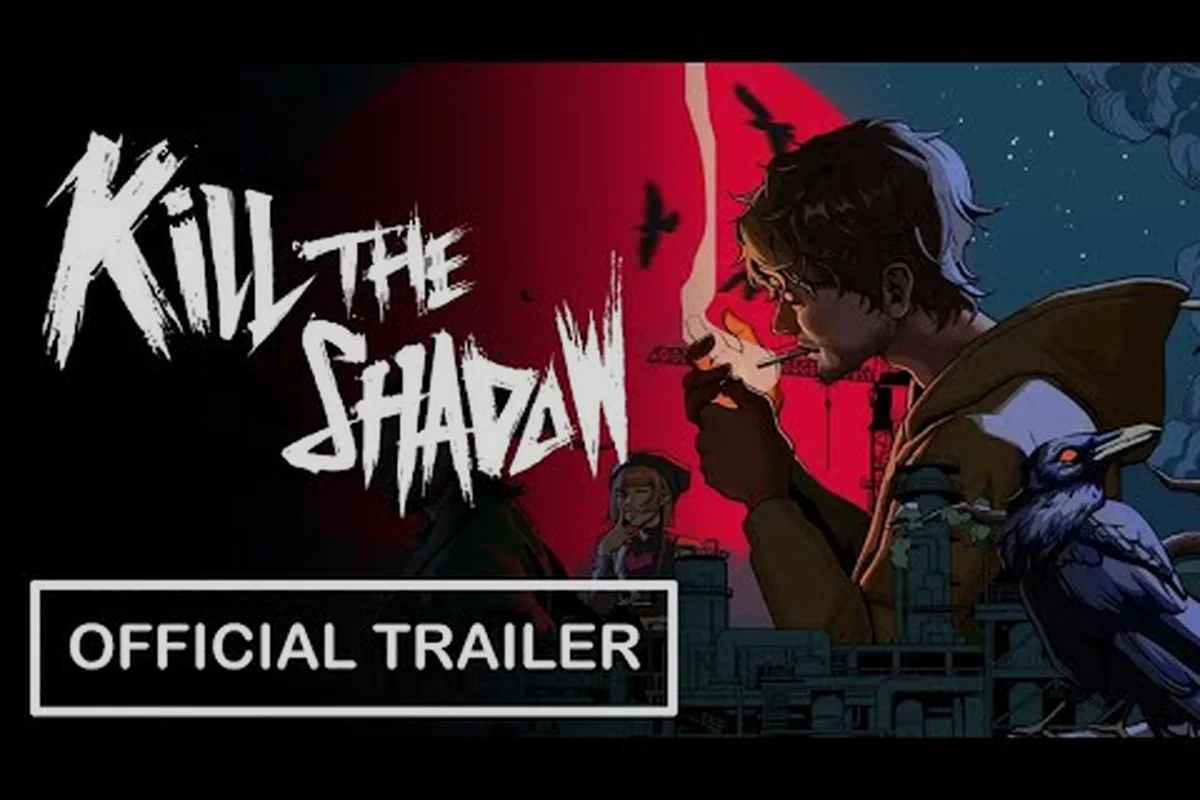
Kill The Shadow: Dark Tide City Detective RPG Guide
Welcome to Dark Tide City, the rain-soaked, neon-streaked urban nightmare that serves as the backdrop for Shadowlight's critically acclaimed 2.5D pixel-noir detective RPG, Kill The Shadow. If you have just picked up this hauntingly atmospheric title and feel a little lost in its tangled web of conspiracies, time loops, and morally grey characters, this guide is your magnifying glass. We will walk you through every essential system, location, and character you need to know to crack the case alongside protagonist Lucas and his spectral partner, The Shadow.
Kill The Shadow is not your typical detective game. It blends traditional point-and-click investigation with a unique combat-free deduction system built around a corkboard, a supernatural time rewind mechanic tied to a sentient entity called The Shadow, and a branching narrative that rewards careful exploration of every district in Dark Tide City. This guide consolidates everything you need to navigate that complexity, whether you are a newcomer learning how the corkboard deduction interface works or a returning player hunting for the last few endings.
For an even deeper look at the city's design philosophy, check out our Dark Tide City lore breakdown, and for a comprehensive map of every neighborhood, see the Dark Tide City districts overview.
Welcome to Dark Tide City: The Setting of Kill The Shadow
Dark Tide City is a fictional coastal metropolis caught between old-world corruption and neon-lit futurism. It is divided into several distinct districts, each with its own visual identity, supporting cast, and set of cases. As Lucas, a down-on-his-luck private investigator with a mysterious past, you wake up one night to find a strange entity — The Shadow — bound to your consciousness. From that moment on, the city becomes your puzzle box.
The developers at Shadowlight have described Dark Tide City as a "living labyrinth" where every alley, barbershop, and backroom can hide a clue. The city's verticality is reflected in the 2.5D presentation: layered parallax backgrounds, animated weather effects, and pixel-art character sprites give the world a cinematic feel without sacrificing the intimacy of a side-scrolling adventure.
Before we dive into mechanics, here is a quick table summarizing the major districts and their investigative focus:
| District | Atmosphere | Key Cases | Notable NPCs |
|---|---|---|---|
| Shipwreck Wharf | Salt-rusted docks, foghorns | Smuggling ring, missing dockworker | Captain Wang, Teddy |
| Pig Cage Walled City | Cramped tenements, lantern light | Serial arsonist, gang war | Kiki, informant Liu |
| The Neon Quarter | Rain-slicked streets, holo-ads | Corporate espionage, blackmail | Club owner Mei, hacker Zane |
| Old Town | Brick facades, jazz clubs | Cold murder, stolen artifact | Archivist Rose, Father Doyle |
| Industrial Heights | Smokestacks, protests | Labor strike sabotage, poisoning | Union boss Greta, foreman Cole |
Each district is fully explorable from chapter two onward, and revisiting earlier zones with new evidence often unlocks additional dialogue trees and side investigations.
Core Mechanics: Time Rewind, The Shadow, and Corkboard Deduction
The three pillars of Kill The Shadow are time rewind, The Shadow entity companion, and the signature corkboard deduction board. Together they transform what would otherwise be a linear adventure into a true detective simulation.
What Makes Time Rewind Unique
Unlike traditional point-and-click games where a missed clue means reloading a save, time rewind in Kill The Shadow is integrated into the world itself. The Shadow allows Lucas to briefly reverse local events — a knocked-over glass returns to a table, a witness reappears at a doorway, a security camera rewinds three seconds. This is not free-form save-scumming; it is a narrative-driven ability with strict limits.
Every time you activate time rewind, a meter at the bottom of the screen called the Shadow Gauge depletes. It recharges by collecting specific items called Echo Fragments hidden in the environment, and by making deductions on your corkboard. This creates a satisfying risk-reward loop: you can rewind to grab a clue you missed, but you may be unable to rewind again for the crucial moment in a boss encounter later.
How The Shadow Entity Works
The Shadow is not just a tool — it is a character. It communicates with Lucas through stylized speech bubbles and reacts to the choices you make. In some story branches, The Shadow becomes increasingly unstable, and its dialogue hints at a much larger conspiracy surrounding Dark Tide City's founding.
The entity also provides passive bonuses tied to your chosen build path. A Spirit-focused Lucas can channel The Shadow to read emotional residue from objects, revealing hidden thoughts. A Charm-focused Lucas can convince The Shadow to whisper suggestions during conversations, giving you extra dialogue options.
Mastering Corkboard Deduction
The corkboard deduction system is the heart of every investigation. After gathering evidence, you return to your office and pin photos, documents, and witness statements onto the corkboard. The board is divided into named clusters corresponding to your active case.
When you believe two pieces of evidence are connected, you drag one string to another. A correct connection produces a satisfying click, a small animation, and a piece of deductive reasoning that updates your case journal. Incorrect connections are quietly rejected — there is no punishment, but there is also no reward. This system encourages experimentation without frustrating trial-and-error, making corkboard deduction both accessible and deeply satisfying for completionists.
Character Builds: Strength, Spirit, and Charm Explained
One of the most distinctive features of Kill The Shadow is its three-pronged character build system. When you first meet The Shadow, you choose a dominant approach that shapes how Lucas interacts with Dark Tide City. These builds are not mutually exclusive — you can dip into all three — but specializing opens unique dialogue, exclusive evidence, and even alternative solutions to combat encounters (the game features stylized, turn-based confrontations resolved through dialogue and stat checks rather than traditional fighting).
| Build | Primary Stat | Strengths | Unique Perks |
|---|---|---|---|
| Strength | Physical intimidation, persistence | Break down doors, force confessions | "Iron Jaw" — survive lethal dialogue checks once per chapter |
| Spirit | Supernatural empathy, intuition | Read emotional residue, commune with The Shadow | "Echo Sight" — see ghostly clues invisible to other builds |
| Charm | Persuasion, deception, social grace | Talk your way past guards, seduce informants | "Silver Tongue" — unlock two extra dialogue options per NPC |
Strength Build: The Brawler Detective
A Strength build turns Lucas into a classic hardboiled bruiser. In Shipwreck Wharf, for example, a Strength-focused player can kick open a smuggler's crate to find contraband, then physically intimidate a dockhand into revealing the location of Captain Wang's hidden office. This build is ideal for players who prefer action and direct confrontation.
Spirit Build: The Medium Detective
The Spirit path is the most thematically resonant choice, given Lucas's bond with The Shadow. Spirit investigators see overlays of past events when examining objects — a bloody knife flickers with the victim's final moments, a letter briefly glows with the sender's handwriting. This build is essential for unlocking the game's deepest lore routes, particularly the one connected to Pig Cage Walled City's founding myth.
Charm Build: The Smooth Detective
Key Districts and Locations in Dark Tide City
While every corner of Dark Tide City is worth exploring, two locations are so central to the main storyline that they deserve special attention.
Shipwreck Wharf Walkthrough
Shipwreck Wharf is the first major district you investigate after the tutorial chapter. The case begins with a missing dockworker named Tobias Hale, last seen at the Rusty Anchor tavern. As Lucas, you will:
-
Interview the bartender, who gives you a torn receipt.
-
Use time rewind on the tavern's clock to glimpse a hooded figure leaving through the back.
-
Pin the receipt and the witness description to your corkboard to unlock a new deduction: The Smuggler's Ledger.
-
Follow the trail to Captain Wang, the corrupt harbormaster who is either your greatest ally or worst enemy depending on your choices.
Shipwreck Wharf is also home to Teddy, a young pickpocket who serves as both an informant and a recurring party member. Teddy's trust is gated behind your Charm or Strength choices during Act I, and he provides unique context for the smuggling conspiracy if you bring him along to later chapters.
Pig Cage Walled City Investigation
The Pig Cage Walled City (sometimes referenced in community guides by its older transliteration, Zhulong) is the labyrinthine slum district where most of Act II unfolds. Its narrow alleyways are stacked six stories high, connected by external staircases and pulley-operated cargo baskets. The case here revolves around a series of suspicious fires that have been driving residents out — and conveniently clearing land for a corporate developer.
To solve it, you must track down Kiki, a former street artist turned reluctant arson investigator. Kiki's network of graffiti tags functions as a hidden map: spray-painted symbols on walls point to safe houses, witness locations, and secret caches of evidence. Using Spirit-level perception, you can decode these tags automatically; otherwise, you must purchase Kiki's translation notes from a back-alley vendor.
For a complete district map including every alley and rooftop, check our Pig Cage Walled City guide.
Major Characters: Captain Wang, Kiki, and Teddy
Kill The Shadow boasts one of the strongest casts in recent indie RPGs. Beyond protagonist Lucas and his bond with The Shadow, three supporting characters drive the emotional core of the story.
| Character | Role | Affiliation | Story Impact |
|---|---|---|---|
| Captain Wang | Harbormaster of Shipwreck Wharf | City Police (officially) / Smugglers (unofficially) | Determines whether Lucas gets access to the docks and the fate of the missing dockworker |
| Kiki | Graffiti artist and informant | Independent | Decodes the Pig Cage Walled City's hidden messages and unlocks the arsonist's true motive |
| Teddy | Pickpocket and street urchin | None | Provides emotional stakes and the key to a secret fourth ending if you keep him out of jail |
Captain Wang is the most morally ambiguous figure in the game. He can be your patron, your informant, or the primary antagonist of Act I, depending entirely on how you present the evidence you gather against him. A Charm-built Lucas can even recruit Wang as a permanent contact, opening a side business that generates Echo Fragments between chapters.
Kiki is the heart of the Pig Cage storyline. Her art is both a narrative device and a literal gameplay mechanic. Building a relationship with her through Spirit-focused conversations unlocks a hidden ending where the Pig Cage Walled City is preserved as a cultural landmark.
Teddy, the youngest of the trio, anchors the game's theme of found family. If you consistently choose dialogue options that protect him from harm — refusing bribes that would implicate him, paying his debts, intervening when he is caught stealing — you unlock the "Streetlight" ending, widely considered the most emotionally satisfying conclusion.
For more context on the wider cast and how each character fits into Dark Tide City's political web, see our Dark Tide City lore article.
Investigation Tips and Detective Strategy
To wrap up this guide, here are some field-tested tips for new investigators working the mean streets of Dark Tide City:
-
Save your time rewind for crucial moments. The Shadow Gauge refills slowly, and there is no way to fully restore it mid-chapter. Use rewind sparingly, and always scan rooms manually first.
-
Talk to every NPC twice. Many characters give different dialogue after you have made new corkboard deductions, so revisit old conversations after each breakthrough.
-
Pin everything, even red herrings. The corkboard accepts all evidence, and some seemingly useless items later connect to the secret ending.
-
Match your build to your case. If you are stuck in Shipwreck Wharf, a Strength build lets you force open locked containers that other builds must solve through dialogue.
-
Listen to The Shadow. When The Shadow speaks unprompted, it is almost always reacting to a clue nearby. Slow down and examine your surroundings.
-
Explore vertically. Dark Tide City's 2.5D design means rooftops, fire escapes, and underground tunnels are often more important than the streets themselves.
If you want to confirm any of these tips against the developer's own design notes, the official Kill The Shadow Steam page includes a "Behind the Mechanics" developer diary that complements this guide beautifully.
Dark Tide City FAQ
What is the main objective in Kill The Shadow's Dark Tide City?
The primary objective is to investigate a series of connected crimes across Dark Tide City while uncovering the truth behind The Shadow entity bound to Lucas. There is no single "win condition" — instead, the game tracks your corkboard progress and resolves multiple branching endings.
How does corkboard deduction actually work in practice?
You gather evidence, return to your office, and pin items to a physical corkboard. Dragging a string between two related pieces triggers a deductive thought and advances the case. The system rewards careful observation and punishes neither guessing nor exploration.
Should I pick Strength, Spirit, or Charm on my first playthrough? Spirit is the most narrative-rich choice and integrates most tightly with The Shadow's abilities. However, Charm offers the easiest difficulty curve thanks to its extra dialogue options, while Strength is ideal for players who enjoy forceful investigation.
Can I change my build later in the game?
Yes. After Act I, you can redistribute points at any save point. The game is designed to let you experiment, and many of the most satisfying moments come from mixing two builds — for example, a Spirit-and-Charm hybrid that decodes Kiki's graffiti through empathy.
Are there missable characters like Captain Wang, Kiki, or Teddy?
All three can be lost or permanently alienated depending on early choices. Captain Wang leaves if you accuse him publicly in Act I. Kiki disappears if you side with the corporate developer. Teddy is arrested if you fail to clear him during the Shipwreck Wharf investigation.