
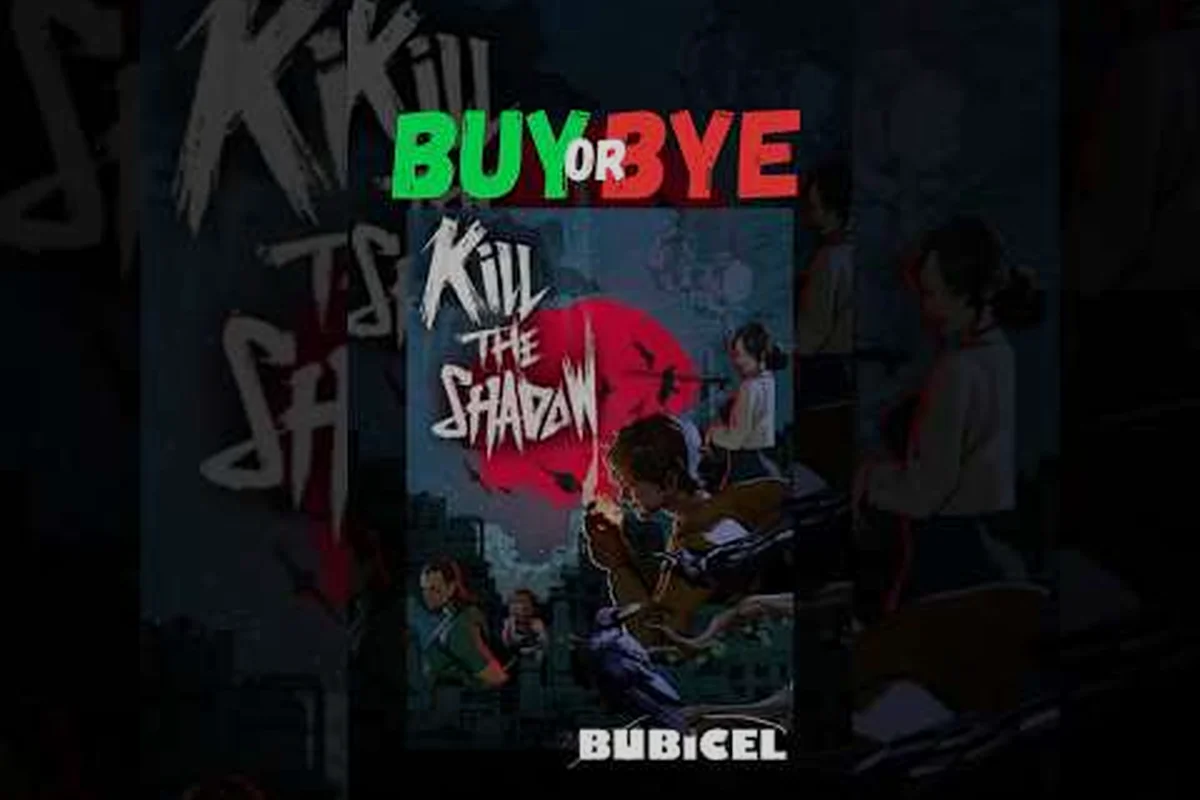
Kill The Shadow Game Review 2026: A Pixel-Noir Detective Masterpiece
When Shadowlight studio first dropped the demo for Kill The Shadow earlier this year, the indie scene took notice. Now, with the full release live and an 87% Positive rating on Steam, this 2.5D pixel-noir detective RPG has cemented itself as one of the most compelling detective experiences of 2026. Set in the rain-soaked, morally grey streets of Dark Tide City, the game puts you in the worn trenchcoat of Lucas, a disgraced ex-cop who shares his mind with The Shadow, a supernatural entity bound to his soul. If that premise already sounds irresistible, wait until you experience the corkboard deduction system and the brilliant time rewind mechanic.
In this comprehensive Kill The Shadow game review 2026, we'll dissect every corner of this strange, beautiful, and brutal title, from the Strength, Spirit, and Charm build paths to the towering figures of Captain Wang, Kiki, and Teddy, and the blood-stained alleys of Pig Cage Walled City and the abandoned docks at Shipwreck Wharf.
What Makes Kill The Shadow Stand Out in 2026
The detective RPG genre is a crowded one. You have your L.A. Noire-style interrogations, your Disco Elysium dialogue trees, and your pixel-art throwbacks à la Lamplight City. So where does Kill The Shadow fit? Somewhere distinctly its own.
Shadowlight has crafted something that feels simultaneously nostalgic and shockingly fresh. The game renders its environments in stunning hand-drawn pixel art, but those environments are full 3D spaces with dynamic lighting, volumetric rain, and real-time shadows. Walk down a neon-lit backstreet in the Pig Cage Walled City district, and you'll see puddles reflect flickering signage as cars hiss past. Talk to a suspect, and the camera pushes in with cinematic framing on those gorgeous 2D sprites.
But the real magic is in the writing. Lucas is not a quippy noir archetype. He's a man broken by the loss of his partner, haunted by The Shadow whispering in the back of his skull, and forced to navigate a city where the cops are corrupt, the gangs are cruel, and the truth is rarely what it seems.
A City That Breathes: Dark Tide City Setting
Dark Tide City is a divided metropolis, split by an enormous wall known as the Duskline that separates the gleaming corporate spires of the north from the rotting, overcrowded slums of the south. The Pig Cage Walled City is the beating, bleeding heart of the south, a labyrinth of stacked tenements, illegal markets, and open sewers where every alley ends in either a dead end or a deal. The Shipwreck Wharf, meanwhile, is where the city's smuggling operations, broken families, and unfinished business wash up with the tide.
The setting isn't just window dressing. Every district has its own politics, factions, and emotional weight. Whether you're chasing a runaway kid through the neon Market of Tongues or piecing together a gang war in the rusted hulls of the Wharf, the city feels alive.
Lucas and The Shadow: A Haunted Partnership
The central relationship of the game is between protagonist Lucas and The Shadow, a parasite-like entity bound to him through an occult ritual gone wrong. The Shadow doesn't speak in full sentences — it whispers fragments, hints, and warnings. It can manipulate small objects, glide through locked doors, and even rewind time on a short loop. Mechanically, this time rewind ability is one of the most innovative features in the game.
If you fail a dialogue check, get caught, or make the wrong choice, you can press a button and rewind the last few seconds — the world catches up, NPCs repeat their previous actions, and you can try again with full knowledge of the outcome. It's Groundhog Day meets L.A. Noire, and it's glorious.
The Corkboard Deduction System: Where Investigations Come Alive
The corkboard deduction system is, without exaggeration, one of the best detective mechanics ever put into a video game. Forget the obvious "evidence goes here" minigames of yesteryear. Shadowlight has built a fully realized, tactile deduction board.
How Corkboard Deduction Works
Walk into Lucas's apartment or precinct office, and you'll find a literal corkboard pinned with photos, witness statements, newspaper clippings, and murder weapons. You can drag, rotate, and pin these items freely. String different pieces of evidence together with colored thread, and the game rewards you with context-aware deductions:
-
Blue thread connects clues that confirm each other
-
Red thread indicates contradictions you must resolve
-
Yellow thread marks leads that need further investigation
When three or more pieces of evidence connect into a coherent theory, The Shadow whispers a "Breakpoint" insight, unlocking new dialogue options, locations, or alternative endings.
The system rewards lateral thinking. Multiple solutions exist for most cases, and your deduction board is yours alone — no two players will connect the board the same way. It's an approach that feels more like a real detective's workstation than any "detective vision" gimmick.
Comparison with Competing Systems
| Feature | Kill The Shadow | Disco Elysium | L.A. Noire |
|---|---|---|---|
| Visual Deduction Board | ✅ Corkboard with strings | ❌ Internal monologue | ❌ Mind map menus |
| Player-Led Logic | ✅ Free arrangement | ⚠️ Choice-driven | ⚠️ Linear cases |
| Rewind Mechanic | ✅ Time rewind | ❌ None | ❌ None |
| Moral Ambiguity | ✅ High | ✅ High | ⚠️ Medium |
This blend of freeform board-puzzling and supernatural ability makes Kill The Shadow feel like the next evolutionary step in detective games. It's no surprise Steam reviewers are flocking to it.
Build Path Variety: Strength, Spirit, and Charm Reviewed
Unlike many RPGs that lock you into a single class, Kill The Shadow lets you shape Lucas through three primary attributes that influence gameplay, dialogue, and combat. Each choice ripples across the entire experience.
Strength Build: The Brawler Detective
Pump points into Strength and Lucas becomes a street-smart bruiser who can intimidate suspects, kick down doors, and dominate physical confrontations. The Strength build is brutal in combat — Lucas's punches send enemies flying into environmental hazards, and he can lift heavy objects that block other paths.
Strength-focused dialogue options let Lucas threaten, demand, or physically coerce information out of reluctant witnesses. Some suspects break immediately. Others become permanent enemies, locking off certain quest resolutions.
Spirit Build: The Shadow Whisperer
Investing in Spirit deepens Lucas's bond with The Shadow. Higher Spirit allows the entity to manifest more powerfully — manipulating objects at greater range, scouting through walls, and even possessing weak-willed NPCs for short bursts.
The Spirit build is the strongest for solving mysteries, since The Shadow's hints are more frequent and accurate. Spirit dialogue options are eerie and philosophical, often revealing truths that pure Strength or Charm would miss. The downside? Lucas risks losing himself. At max Spirit, the endings blur the line between hero and monster.
Charm Build: The Silver-Tongued Liar
The Charm build turns Lucas into a master manipulator. He can sweet-talk bartenders for information, seduce suspects into revealing their secrets, or bluff his way past fortified checkpoints. Combat is more about stylish dodges and improvised weapons than raw power.
Charm opens the broadest set of non-lethal resolutions. Many cases in the Pig Cage Walled City and Shipwreck Wharf districts have unique Charm-only outcomes, including saving lives that other builds condemn.
Build Effectiveness at a Glance
| Build | Combat Style | Dialogue Power | Best For |
|---|---|---|---|
| Strength | Brawler / Intimidator | Threats & coercion | Direct confrontation |
| Spirit | Possession / Whispers | Supernatural insight | Complex mysteries |
| Charm | Dodger / Manipulator | Persuasion & seduction | Non-lethal resolutions |
The genius is that you can mix and match. A balanced 5/5/5 spread yields a flexible Lucas, while a specialist 12/3/3 build makes for a wildly different playthrough. Combined with the time rewind mechanic, you can experiment without consequence.
The Cast of Dark Tide City
A great detective needs great witnesses, suspects, and allies. Kill The Shadow delivers a cast of memorable characters, each with their own secrets, regrets, and motivations.
Captain Wang: The Broken Idealist
Captain Wang is Lucas's former mentor, now head of the city's corrupt Central Precinct. He's the man who knows what really happened to Lucas's partner, and he stands between Lucas and the truth at every turn. Wang is sympathetic, terrifying, and morally compromised — a perfect noir antagonist.
Dialogue with Wang changes dramatically based on your build. A Charm build can coax hints from him. A Strength build can beat confessions out of him. A Spirit build lets The Shadow peek into his dreams.
Kiki: The Street-Smart Information Broker
Kiki runs the underground network of informants across Dark Tide City. She's sharp, funny, lethal, and utterly unconvinced that Lucas can be trusted. Recruiting her as an ally is a multi-stage quest that spans every district in the game.
Kiki is also the primary merchant for rare components, including items that strengthen The Shadow's abilities. Befriending her unlocks unique Spirit-only conversation trees.
Teddy: The Gentle Giant
Teddy is a hulking ex-mercenary who runs a soup kitchen in the Pig Cage Walled City. He's one of the few characters in Dark Tide City who is unambiguously good, which makes him a target. Teddy's storyline is one of the most emotionally gut-punching in the game, with outcomes that hinge on whether you reach him in time.
Supporting Cast Highlights
| Character | Role | Key District | Build Synergy |
|---|---|---|---|
| Captain Wang | Corrupt Police Captain | Central Precinct | Spirit (truths) |
| Kiki | Information Broker | Market of Tongues | Charm (recruitment) |
| Teddy | Soup Kitchen Owner | Pig Cage Walled City | Strength (rescue) |
| Madame Ren | Fortune Teller | Shipwreck Wharf | Spirit (visions) |
| Razor | Gang Lieutenant | Duskline Border | Charm (alliance) |
Each of these characters interacts with The Shadow in subtle ways. Whisper to them, and they'll tell you things they'd never say to Lucas alone.
Visual Style, Performance, and Technical Verdict
The 2.5D Pixel-Noir Look
The most striking thing about Kill The Shadow is its visual identity. The 2D pixel sprites are meticulously animated — Lucas's coat flaps in the rain, cigarette smoke curls realistically, The Shadow's wisps distort the air around them. Behind those sprites, fully modeled 3D environments with real-time lighting react dynamically.
In one memorable scene at the Shipwreck Wharf, a storm rolls in mid-conversation. Lighting flickers, puddles shift color, and the entire emotional tone of the scene changes without a single cutscene. It's breathtaking pixel-noir storytelling.
Performance and Optimization
For a 2.5D pixel-noir detective RPG built in a custom engine, performance is excellent. On a mid-range PC, the game runs at a locked 60 FPS. On Steam Deck, the framerate holds between 50-60 FPS with minor adjustments. Console ports (PS5, Xbox Series X) are smooth. The Switch port — surprisingly — works well, given the pixel art aesthetic.
Technical Snapshot
| Platform | Performance | Notes |
|---|---|---|
| PC (RTX 3060+) | 60 FPS @ 1080p | Default settings |
| Steam Deck | 50-60 FPS | Recommended preset |
| PS5 | 60 FPS @ 4K | HDR supported |
| Xbox Series X | 60 FPS @ 4K | HDR supported |
| Switch | 30 FPS @ 720p | Handheld mode |
There are minor bugs at launch — occasional texture pop-ins, a few dialogue triggers that need reloading. Shadowlight has been patching rapidly, with the 1.02 patch already addressing several community-reported issues.
Final Verdict: Should You Buy Kill The Shadow?
Yes. Unreservedly.
Kill The Shadow is not just a great detective game — it's a great RPG, a great pixel-noir experience, and one of the best indie titles of 2026. The corkboard deduction system is genuinely innovative. The time rewind mechanic is mechanically elegant. Lucas and The Shadow form one of the most compelling protagonist pairings in recent memory. Dark Tide City is a setting you'll want to revisit again and again, particularly the unforgettable Pig Cage Walled City and Shipwreck Wharf districts.
Whether you mainline the main story, dedicate hundreds of hours to the deduction side content, or replay with a fresh Strength, Spirit, or Charm build, this is a game that rewards investment. And at its current Steam asking price, it's an absolute steal.
For more contextual reading on how player reviews translate into final scores, see our guide on Steam review aggregation, or check how Kill The Shadow compares to other 2026 releases on our Metacritic score breakdown.
If you want a simpler scoring approach, our review score guide breaks down how we assign final ratings. For external perspective, the official Kill The Shadow Steam page is worth bookmarking — the community is active, the developers are responsive, and the modding scene is already producing incredible fan content.
Recommended Score: 9.2 / 10
Game Review FAQ
Is Kill The Shadow worth buying in 2026?
Absolutely. With an 87% Positive rating on Steam, polished mechanics, and a powerful narrative centering Lucas and The Shadow, Kill The Shadow is one of the strongest detective RPGs of 2026. Its replayability through Spirit, Strength, and Charm builds adds tremendous value.
How long is the Kill The Shadow main story?
The main story takes roughly 25-30 hours. Completionists, who fully explore Dark Tide City, solve every corkboard deduction, and pursue all three builds, can expect 60-80 hours across multiple playthroughs.
Do I need to play the demo before the full game?
Not at all. The demo is a great teaser covering the Pig Cage Walled City prologue, but the full release includes expanded mechanics, deeper time rewind systems, and full NPC arcs for Kiki, Captain Wang, and Teddy that stand completely on their own.
Which build is best for a first playthrough?
A balanced 6/6/6 spread of Strength, Spirit, and Charm gives the most flexibility and is recommended for first-time investigators. Spirit excels at pulling secrets from The Shadow, while Strength and Charm provide strong dialogue and combat options.
Is there multiplayer or co-op?
No. Kill The Shadow is a strictly single-player experience. The deduction mechanics and intimate noir storytelling are built around the solitary relationship between Lucas, The Shadow, and the shadows of Dark Tide City — and that's exactly where the game shines brightest.