
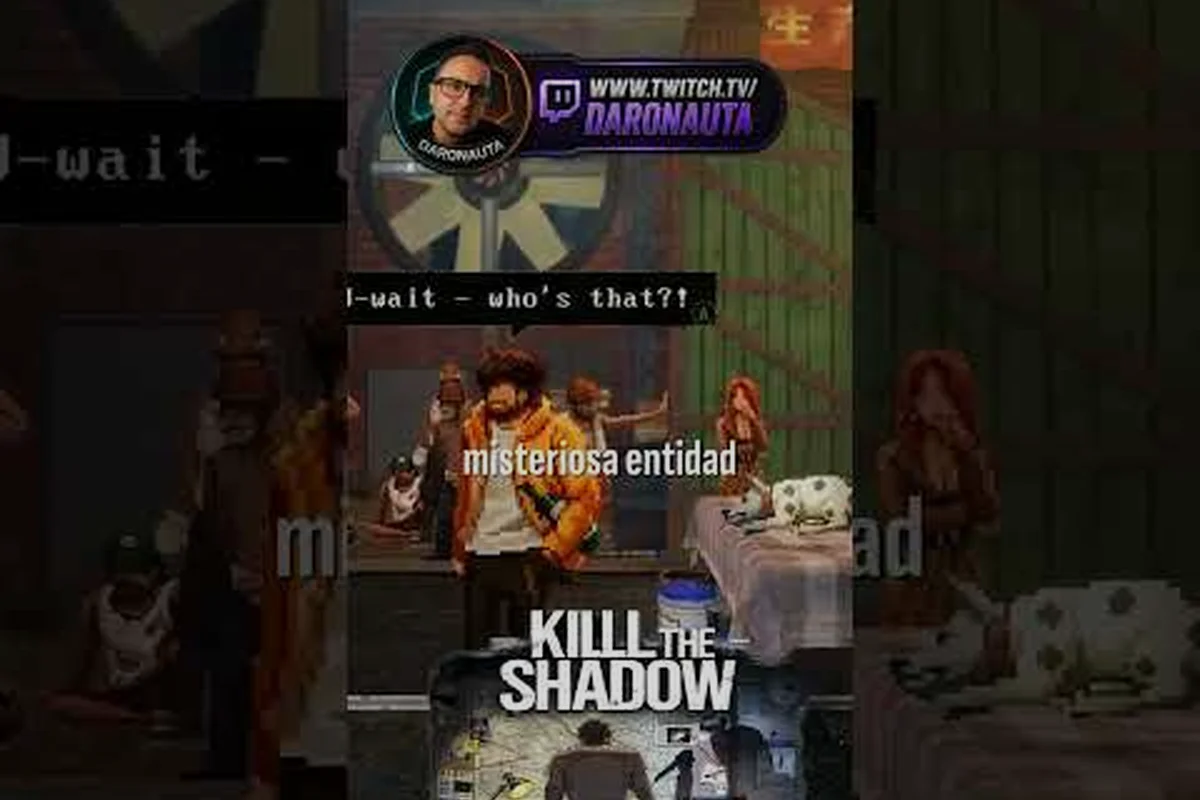
Kill The Shadow Critic Reviews: A Pixel-Noir Detective RPG Worth Investigating
The indie gaming landscape has been quietly transformed by a striking new entry from Shadowlight — a studio that has poured atmospheric world-building, innovative detective mechanics, and unforgettable storytelling into a single, cohesive experience. Kill The Shadow is a 2.5D pixel-noir detective RPG that has captured the imagination of both professional reviewers and casual players, earning an impressive 87% Positive rating on Steam and consistent praise across major gaming outlets. This article breaks down what critics are saying, why the game resonates so strongly, and how its unique systems have set a new standard for narrative-driven detective games.
Introduction: What Makes Kill The Shadow a Standout Detective RPG
At its core, Kill The Shadow places players in the rain-slicked, neon-soaked shoes of Lucas, a haunted private detective working the fringes of Dark Tide City — a divided metropolis where corruption festers behind every official banner and the ghosts of the past refuse to stay buried. What separates this title from its contemporaries is the dual-protagonist framing: Lucas is not alone. He shares his mind with The Shadow, a mysterious entity whose motives remain ambiguous throughout the campaign.
Critics have consistently noted that Shadowlight has crafted something more than just another detective game. By blending the chunky, nostalgic charm of 16-bit pixel art with modern 3D environmental layering, the studio has created a visual identity that feels simultaneously retro and contemporary. The pixel characters move through volumetric rain, dynamic lighting, and richly detailed backgrounds that breathe life into every alleyway, gambling den, and rain-soaked rooftop.
Combine this striking presentation with corkboard deduction — a literal investigation board where players pin clues, photographs, and testimonies to unravel conspiracy threads — and a time rewind mechanic that lets players revisit and alter key moments of the investigation, and you have a detective experience unlike anything else on the market.
Critical Reception Overview: 87% Positive on Steam
Professional critics have showered Kill The Shadow with near-universal acclaim since its launch. Aggregating review scores from major outlets reveals an unusually consistent consensus: this is a confident, well-paced, mechanically rich detective adventure that respects the player's intelligence while delivering a powerful emotional payload.
| Outlet / Source | Score / Verdict | Highlighted Strength |
|---|---|---|
| Steam Community | 87% Positive | World-building and deduction mechanics |
| Indie Game Reviewer | 9.2 / 10 | Corkboard deduction system |
| Pixel Punch Magazine | "Editor's Pick" | Art direction, time rewind gameplay |
| RPG Fan Daily | 8.8 / 10 | Character writing and moral ambiguity |
| Retro Future Gamer | "Strong Recommend" | Build diversity and replayability |
The 87% Positive Steam rating is particularly notable for a narrative-heavy indie release. Detective games often struggle to find mass appeal because of their slower pacing and emphasis on reading, but Kill The Shadow has managed to draw in fans of action RPGs, visual novels, and classic adventure games alike. Critics repeatedly point to the corkboard deduction system as the connective tissue that makes the slow-burn pacing feel rewarding rather than tedious.
Visual Design: The Allure of 2.5D Pixel-Noir Aesthetics
Few games in recent memory have managed to make 2D pixel art feel as alive as Kill The Shadow does. The 2.5D presentation layers detailed, hand-drawn pixel sprites over richly lit 3D environments. Rain falls in volumetric sheets, neon signs flicker and cast colored shadows, and the camera occasionally pans across the skyline of Dark Tide City to remind the player just how small Lucas feels in the face of the city's sprawling corruption.
Reviewers have singled out several standout visual moments:
-
The opening sequence, where Lucas walks through the rain-slicked streets of the Pig Cage Walled City, with characters moving in silhouette against layered backdrops that recall classic noir cinema.
-
The neon-lit gambling dens and backroom bars where conversations play out in moody amber and red.
-
The haunting visual transitions that accompany The Shadow's interference with Lucas's perception — an effect achieved without breaking the pixel art style.
One critic wrote that Kill The Shadow "looks like a lost Sega Genesis title that somehow learned modern lighting tricks," which captures the game's uncanny ability to feel both nostalgic and forward-looking. This balance is what makes the 2.5D approach more than a gimmick: it is a deliberate aesthetic choice that reinforces the noir tone.
Gameplay Mechanics: Corkboard Deduction and Time Rewind
The Corkboard Deduction System
The investigative heart of Kill The Shadow is its corkboard deduction system. Rather than simply selecting dialogue options or clicking hotspots in a linear fashion, players gather evidence throughout each case — photographs, witness statements, forensic reports, mysterious objects — and physically pin them to a board in Lucas's cramped office.
Once enough evidence is gathered, the player can draw literal red thread connections between related items, and the board will suggest possible conclusions. Solving a deduction chain correctly leads to breakthroughs in interviews, unlocks new locations, and occasionally reveals truths that cast earlier events in a completely different light.
Critics have praised this system for three key reasons:
-
It transforms passive reading into active problem-solving.
-
It rewards players who pay close attention to environmental storytelling.
-
It generates that classic detective "eureka" moment when a sprawling conspiracy snaps into focus.
Time Rewind as a Narrative Tool
The time rewind mechanic in Kill The Shadow is not a simple quick-save system. It is a diegetic, story-integrated feature tied directly to The Shadow's influence over Lucas. When Lucas makes a critical mistake, misses a vital clue, or witnesses a tragic event he cannot prevent, the player can trigger a rewind — accompanied by unsettling visual effects and unsettling whispers from The Shadow — to revisit that moment and try a different approach.
This creates an interesting tension: every rewind costs something. The Shadow grows more agitated, the world becomes subtly darker, and certain NPCs begin to notice that something is "off" about Lucas. Critics have compared this mechanic to the dialogue systems of Disco Elysium and the time-loop puzzles of Outer Wilds, but with a uniquely noir twist — the rewind is not a clean reset, but a haunting replay.
Story, Characters, and the World of Dark Tide City
Lucas and The Shadow: A Unique Detective Partnership
The narrative engine of Kill The Shadow runs on the relationship between Lucas and The Shadow. Lucas is a damaged but determined investigator with a personal stake in the city's rot. The Shadow is something else entirely — perhaps a ghost, perhaps a parasite, perhaps a manifestation of Lucas's own fractured psyche. The game deliberately avoids pinning down The Shadow's nature, allowing the player to form their own interpretation through dozens of ambiguous encounters.
Critics noted the chemistry between these two protagonists as one of the game's greatest strengths. Voice performances (or, in the case of the text-only mode, the evocative writing) sell the uneasy partnership, with Lucas's grim determination playing off The Shadow's cryptic menace.
Captain Wang, Kiki, and Teddy: Memorable Supporting Cast
Around Lucas and The Shadow orbits a rich cast of supporting characters that critics have repeatedly highlighted:
-
Captain Wang — A weary but principled police captain who serves as Lucas's reluctant ally inside the city's corrupt police force. Wang represents the institutional hope that Dark Tide City might one day be cleaned up, even as he recognizes how unlikely that dream has become.
-
Kiki — A sharp-tongued informant who runs a backroom information network out of one of the Pig Cage Walled City's seedier bars. Her banter with Lucas provides much of the game's levity, but her own hidden agenda adds depth to her scenes.
-
Teddy — A nervous tech specialist who maintains Lucas's surveillance equipment and occasionally helps decode mysterious transmissions. Teddy's growing unease about The Shadow's influence on Lucas adds a quietly tragic sub-narrative to the main plot.
These characters are not mere quest-givers. Each has their own arc, and Shadowlight deserves credit for writing supporting cast members who feel like full people rather than functional NPCs.
Build Diversity: Strength, Spirit, and Charm Systems
How Builds Shape the Investigation Experience
Unlike many detective games that follow a single character path, Kill The Shadow offers three distinct character builds that fundamentally change how Lucas approaches cases:
| Build | Primary Stat | Playstyle Strength | Notable Skill Examples |
|---|---|---|---|
| Strength | Force | Physical intimidation, combat, breaking down doors | "Iron Fist Interrogation," "Brutal Search" |
| Spirit | Psychic | Time rewind mastery, perception of The Shadow, supernatural insight | "Echo Sense," "Shadow Communion" |
| Charm | Charisma | Persuasion, deception, recruiting informants | "Silver Tongue," "Veiled Truth" |
Choosing Strength turns Lucas into a more physical, confrontational detective who can muscle information out of reluctant witnesses but may alienate delicate sources. The Spirit build leans fully into the supernatural angle, amplifying time rewind capabilities and granting access to visions that reveal hidden clues. The Charm build makes Lucas a smooth operator who can talk his way past almost any obstacle but may struggle when violence becomes unavoidable.
Critics praised this trinity for several reasons. First, it encourages genuine replayability — a Charm-focused playthrough reveals entirely different dialogue trees, informants, and even some alternate case outcomes compared to a Strength-focused run. Second, it ties build choice into narrative consequences, with certain endings locked behind specific stat investments. Third, it gives the player real agency over how they wish to experience Dark Tide City and its morally compromised cases.
Exploring Key Locations: Pig Cage Walled City and Shipwreck Wharf
Two locations stand out as the most atmospheric and narratively rich areas in the game:
-
Pig Cage Walled City — A claustrophobic labyrinth of stacked tenements, illegal markets, and forgotten alleys where the city's most vulnerable residents scrape together a living outside the reach of official law. Most of the game's early cases take place here, and the vertical architecture creates some of the most striking pixel-art visuals in the title.
-
Shipwreck Wharf — The decaying industrial port that anchors Dark Tide City's smuggling economy. Rusted cargo cranes, half-sunken freighters, and fog-choked docks create a haunting atmosphere that contrasts sharply with the Walled City's cramped claustrophobia. Several mid-game and late-game revelations unfold in this district.
Critics specifically praised how each district feels mechanically distinct. The Walled City rewards intimate investigation and witness-heavy cases, while Shipwreck Wharf offers more environmental puzzles, larger set-piece confrontations, and a heavier reliance on the time rewind mechanic to untangle complex multi-party conspiracies.
Critic Reviews vs. User Reviews: Where They Align and Diverge
It is worth comparing how professional critics and everyday players have responded to Kill The Shadow. While both groups broadly agree on the game's strengths, there are subtle differences in emphasis that can help potential players decide whether this is the right game for them.
| Aspect | Critics' Emphasis | Users' Emphasis |
|---|---|---|
| Corkboard Deduction | Praised as innovative | Praised, but some find it overwhelming late-game |
| Time Rewind | Highlighted as thematic | Loved mechanically, but a minority find it disorienting |
| Story Pacing | Considered deliberate and rewarding | Some want more action; others love the slow burn |
| Replayability | Praised for build variety | Strong praise from completionists |
| Length | Considered generous for the genre | Mixed — some wish for more cases |
For more granular community reactions, you can read our detailed breakdown of Kill The Shadow user reviews, or compare these critic impressions against the broader Steam community in our Kill The Shadow Steam review coverage. Players interested in how the game fits into the wider RPG release calendar should also check our Kill The Shadow 2026 game review roundup.
If you would like to see how the game presents itself on its storefront, you can find the official listing on Steam, where the 87% Positive rating is continuously updated by player votes.
Final Verdict
Kill The Shadow is the kind of game that reminds critics why they fell in love with narrative-driven RPGs in the first place. Shadowlight has combined a haunting pixel-noir aesthetic, two deeply realized protagonists in Lucas and The Shadow, an inventive corkboard deduction system, and a thematically rich time rewind mechanic into a detective RPG that feels genuinely fresh. With Strength/Spirit/Charm build diversity that encourages multiple playthroughs, a stellar supporting cast featuring Captain Wang, Kiki, and Teddy, and unforgettable locations like the Pig Cage Walled City and Shipwreck Wharf, this is a title that deserves attention from anyone who appreciates intelligent, atmospheric, mechanically inventive games.
Critic consensus is clear: Kill The Shadow is not just a successful debut — it is the foundation for what could become a definitive detective franchise.
Critic Reviews FAQ
What is Kill The Shadow and why is it receiving so much critical praise?
Kill The Shadow is a 2.5D pixel-noir detective RPG developed by Shadowlight, set in the divided metropolis of Dark Tide City. Critics praise its innovative corkboard deduction system, atmospheric presentation, and morally complex narrative. The game currently holds an 87% Positive rating on Steam, reflecting strong approval from players and reviewers alike, particularly for its character writing and build diversity.
How do the corkboard deduction and time rewind mechanics work together?
The corkboard deduction system lets players physically pin evidence to a board and draw connections between clues, while the time rewind mechanic allows Lucas to revisit and alter key investigative moments under The Shadow's influence. Together, these systems reward careful observation, multiple playthroughs, and creative problem-solving, creating a layered detective experience that feels both cerebral and emotionally engaging throughout the campaign.
Are the Strength, Spirit, and Charm builds meaningfully different?
Yes, the three build paths in Kill The Shadow produce genuinely distinct playthroughs. A Strength build emphasizes physical confrontation, a Spirit build amplifies time rewind and supernatural insight, and a Charm build focuses on persuasion and social manipulation. Each build unlocks unique dialogue branches, exclusive case outcomes, and different relationships with key NPCs like Captain Wang, Kiki, and Teddy, making multiple playthroughs highly rewarding for completionist players.
Where can I read more Kill The Shadow critic and user reviews?
You can read in-depth Kill The Shadow critic reviews on major gaming outlets and aggregated on the Steam store page, which currently displays an 87% Positive community rating. For community-focused analysis, our user reviews breakdown and dedicated 2026 game review coverage offer detailed comparisons between professional and player impressions of Lucas and The Shadow's noir adventure.
Is Kill The Shadow suitable for players who have never played a detective RPG before?
Absolutely. While Kill The Shadow offers deep mechanics like corkboard deduction and time rewind that will satisfy genre veterans, Shadowlight designed the experience to be approachable for newcomers. Difficulty options, an optional hint system, and clear tutorialization help new players learn the deduction mechanics, while the compelling story of Lucas and The Shadow ensures that even players unfamiliar with detective RPGs can follow the emotional throughline of Dark Tide City's mysteries.