
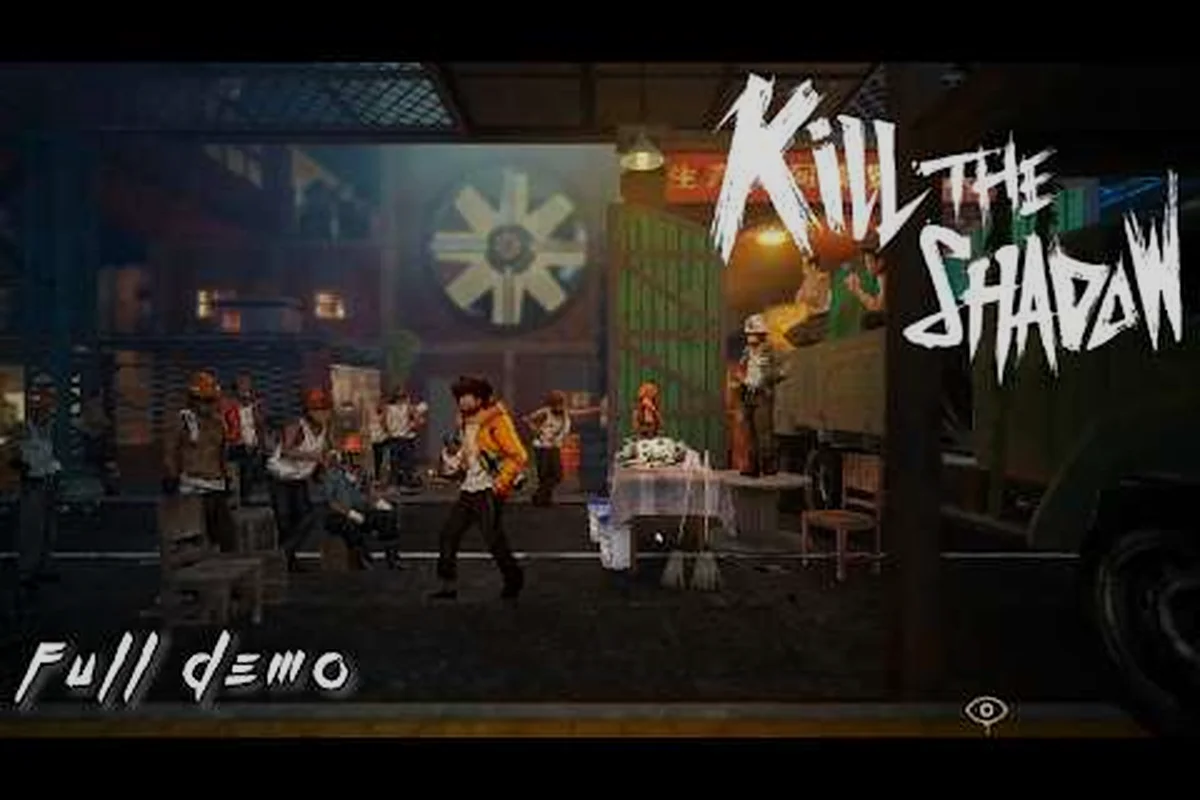
A shadow stretches across a rain-slicked alley in Pig Cage Walled City. Somewhere between the noodle stalls and the leaning tenements, a brilliant clockmaker named Master Reed has vanished without a trace, and only one detective in all of Dark Tide City has the tools to bring the truth to light: Lucas, bearer of a restless entity known as The Shadow. The Master Reed disappearance is one of the earliest and most emotionally charged cases in Kill The Shadow, the 2.5D pixel-noir detective RPG from Shadowlight. In this comprehensive case guide, we walk through every lead, every piece of evidence, and every use of the time rewind mechanic you will need to crack the case wide open and choose the right ending.
This case serves as a soft tutorial for almost every system the game has to offer. You will meet your handler Captain Wang, encounter the streetwise informant Kiki, recruit the muscle Teddy, and revisit iconic neighborhoods like Shipwreck Wharf. By the time you pin your final deduction to the corkboard, you will have a working understanding of the three build paths (Strength, Spirit, and Charm) and how they influence both witness testimony and the combat encounters that gate progression. Read on for a full breakdown.
A Missing Inventor in Pig Cage Walled City
The rain never really stops in Dark Tide City, and the Master Reed case opens on a particularly ugly night. Master Reed is a celebrated horologist and inventor whose workshop sits above a noodle shop in Pig Cage Walled City, the oldest residential block in the city and home to as many back-alley ghosts as living residents. When the morning shift arrives, the door is locked from the inside, the lamps are still warm, but Master Reed is gone. Worse, his newest prototype — a luminous timepiece said to be capable of disturbing local causality — is missing right along with him.
In terms of narrative design, this case is brilliant because it introduces the player to The Shadow, the spectral companion fused to Lucas after a botched street exorcism in the Prologue. The Shadow gives Lucas two distinct powers that define the entire experience. First, it allows him to rewind time, replaying up to roughly twelve seconds of the recent past so he can see an action happen again, undo a fatal mistake, or trigger a supernatural vision. Second, it gives him the focus he needs to operate the corkboard deduction system, where every scrap of evidence is pinned as a physical card and connected with red strings of logic to produce final case rulings. Together, these two systems allow the player to feel like a classic noir detective who also happens to be haunted.
If you are just starting the game, we recommend reading our Kill The Shadow beginner guide before pushing past the Prologue. For a step-by-step walkthrough of how the title screen leads into the first playable scene, see our how to start walkthrough. Both will give you a smoother entry into the case flow described below.
Starting the Case: How to Trigger the Investigation
The investigation begins automatically once you finish the Prologue and the brief, dreamlike flashback sequence aboard the derelict junk at Shipwreck Wharf. After you regain control of Lucas in the present day, head to the precinct headquarters and speak to Captain Wang. She will brief you on the Master Reed case and assign it as your first official dispatch. From here, the in-game case-log keeps everything organized, including dialog options, evidence pickups, and unlockable conclusions that mark the end of an investigation.
Meeting Captain Wang at Shipwreck Wharf Precinct
Captain Wang runs the night-shift detective unit out of an old customs house perched at the edge of Shipwreck Wharf. She is exhausted, sharp-tongued, and tired of cleaning up supernatural messes that fall through the cracks of the regular police force. Speak with her during business hours — in-game time runs from 6 PM to 6 AM — accept the dispatch slip, and then fast-travel to Pig Cage Walled City. Most players will arrive on foot from the eastern gate. If you want a smoother entry and a small reputation bonus with the locals, take the freight elevator up from the noodle shop directly below Master Reed's workshop. The owner, a grandmother named Auntie Mei, will pour you tea and grant you safe passage to the upper floor.
First Lead: Lucas Visits Master Reed's Workshop
When you arrive, the workshop is sealed with a wax seal stamped by the Walled City elders, a decorative but legally meaningful signature that prevents anyone in the district from entering. You can either convince the elders to open it through a Charm check, brute-force the door with a Strength check, or intuit the lock open with a Spirit insight prompt. Picking the right conversation path matters. In this case, the Spirit insight prompt actually unlocks an extra piece of evidence hidden behind a false panel on the east wall — a torn letter that proves Reed was expecting trouble. Make sure your Spirit stat is at least 4 before entering if you want the cleanest possible playthrough.
Suspects, Witnesses, and Motives
Once the workshop is open and Lucas has had a moment to absorb the scene, the corkboard starts to fill up. Three persons of interest quickly emerge. Each one has a strong motive and at least one contradictory statement. Knowing how to read their body language — and how to lean on The Shadow during interrogation — is the difference between a sloppy arrest and a clean conviction.
| Suspect | Role | Apparent Motive | Hidden Tie |
|---|---|---|---|
| Madame Po | Widow of Reed's former business partner | Inheritance and unfinished patent disputes | Had a private meeting with Reed the night he vanished |
| Bro Six-Toe | Loan shark operating out of Shipwreck Wharf | Reed owed him 8,000 lantern-coins | Has an alibi verified by only one witness — Kiki |
| Dr. Hae-Jin | Surgeon who treated Reed for chronic insomnia | Knew the location of Reed's secret second prototype | Was seen carrying a clock case near the dock at 2 AM |
The Three Primary Persons of Interest
Madame Po is the most politically connected of the three. She runs a tea house across the lane and keeps meticulous records of every cent that passed through Reed's studio. Her dialog changes dramatically depending on whether you approach her as Lucas the private investigator, or as Lucas speaking under The Shadow's whispered prompts. With The Shadow active, she reveals that Reed had confided in her about fearing for his life just days before the disappearance. Her alibi is supported by a hand-written guest book from her tea house, but a careful player will notice that two guest entries share the same handwriting despite listing different names — a planted forgery.
Bro Six-Toe is a familiar face to anyone who has played the Walled City tutorial encounters. He is heavy, slow to anger, and prone to long, colorful monologues that spiral into curses. Threaten him with Strength and he clams up immediately; flatter him with Charm and he will inadvertently reveal that he was paid to scare Reed — not to hurt him — and that someone else finished the job. If you press him while standing under a lamp and using Spirit vision, The Shadow will highlight a faint wet smear on his coat that matches a unique brand of oil used only in Reed's workshop.
Dr. Hae-Jin is the most complex of the three. She genuinely cares about Reed's health but has a powerful financial incentive: she stands to gain a 30 percent royalty on the prototype if it ever ships. Her alibi is the most fragile, and combining her statements with Kiki's on-the-record observations is what eventually cracks the case.
Building the Corkboard: Evidence in the Master Reed Case
The corkboard deduction system in Kill The Shadow is the heart of the game and is described in detail in our external references and the developer interview with GamingBolt. Each piece of evidence becomes a physical card. Pulling two compatible cards close together draws a red string between them, and once enough strings are tied to a deduction node, the board upgrades that node, eventually forcing the case toward a firm conclusion. Pieces of evidence come in three forms: physical clues (items you pick up), witness testimony (recorded statements), and Shadow Echoes — fleeting fragments of memory that only Lucas can perceive with The Shadow's help.
For the Master Reed case, here are the key cards you should be aiming to collect on your first sweep of Pig Cage Walled City and Shipwreck Wharf.
| Evidence | Source | Corkboard Use |
|---|---|---|
| Warm lamp glass | Reed's workshop desk | Confirms he was in the room less than one hour earlier |
| Broken wax seal | Doorway frame | Indicates the door was forced, not opened willingly |
| Notebook entry: "3 AM — Door speaks" | Reed's private desk | Suggests a paranoid episode, important if Hae-Jin is the true villain |
| Empty clock case | Floor near workshop window | Implies the prototype was taken, not destroyed |
| Siren song recording | Given by Kiki at the docks | Places Bro Six-Toe at the dock at 2 AM, verifying his alibi |
| Bloodied bandage scrap | Alley directly below the window | Ties Hae-Jin to the crime scene, but does not yet prove intent |
| Ledger page (missing row) | Madame Po's tea house archive | Reveals a payment of 8,000 lantern-coins exactly 24 hours prior |
A clever use of time rewind happens on the windowsill. If you climb out and fall to the alley to trigger a fatal moment, Lucas can immediately rewind and witness the scene where the body is removed, including the silhouette of the figure climbing down. This Shadow Echo unlocks the final testimony card on the board and is required for the Perfect Deduction ending.
Turning Back the Clock: Time Rewind Applications
Time rewind in Kill The Shadow is generous but not infinite. The Shadow grants Lucas the ability to scrub up to roughly twelve seconds of past events at the cost of Spirit stability. If you spam the rewinds in heavy combat, your character can enter an Overcast state where the screen flickers, dialog options become erratic, and certain NPCs refuse to speak to you until the meter recovers. For a case as dialogue-heavy as Master Reed's disappearance, you will mostly use rewinds for two purposes: re-reading evidence by rewinding dialogue to ask follow-up questions, and witnessing Shadow Echoes at fixed locations by walking to the marker and holding the rewind button.
Shadow Echo Locations in the Master Reed Case
Shadow Echo Locations in the Master Reed Case
| Echo # | Location | How to Trigger | Evidence Unlocked |
|---|---|---|---|
| 1 | Reed's workshop windowsill | Climb out and fall, then time rewind | Silhouette of figure climbing down |
| 2 | Alley directly below workshop | Walk to marker, hold rewind | Shadow residue on cobblestones |
| 3 | Madame Po's tea house basement | Enter during business hours with Spirit ≥ 6 | Hidden meeting log |
| 4 | Dock handoff at Shipwreck Wharf | Approach dock at 2 AM in-game | Final testimony card |
There are four scripted Shadow Echoes spread across the case: the windowsill descent in Reed's workshop, the alley landing below the workshop, the back-room confrontation in Madame Po's tea house basement, and the dock handoff at Shipwreck Wharf. Hitting all four is required if you want the cleanest "perfect deduction" ending
Master Reed Disappearance FAQ
How do I find all evidence in the Master Reed disappearance case?
To uncover all evidence in the Master Reed disappearance, you need to use time rewind in the study room after dark, then connect the recovered pocket watch with the corkboard deduction system. The Spirit build reveals an additional hidden testimony from the household staff.
Is the Master Reed case connected to the Citou family?
Yes, the Master Reed disappearance has direct ties to the Citou family through Griff Flint's business dealings. Examining the shipping manifests in the Old Town District reveals a pattern of payments that link Reed to Citou family operations.
What happens if I fail the Master Reed corkboard deduction?
Failing the corkboard deduction for Master Reed locks you out of the full judge ending path but still allows the kill ending and kiss ending routes. The game adjusts subsequent dialogue to account for the incomplete investigation.