
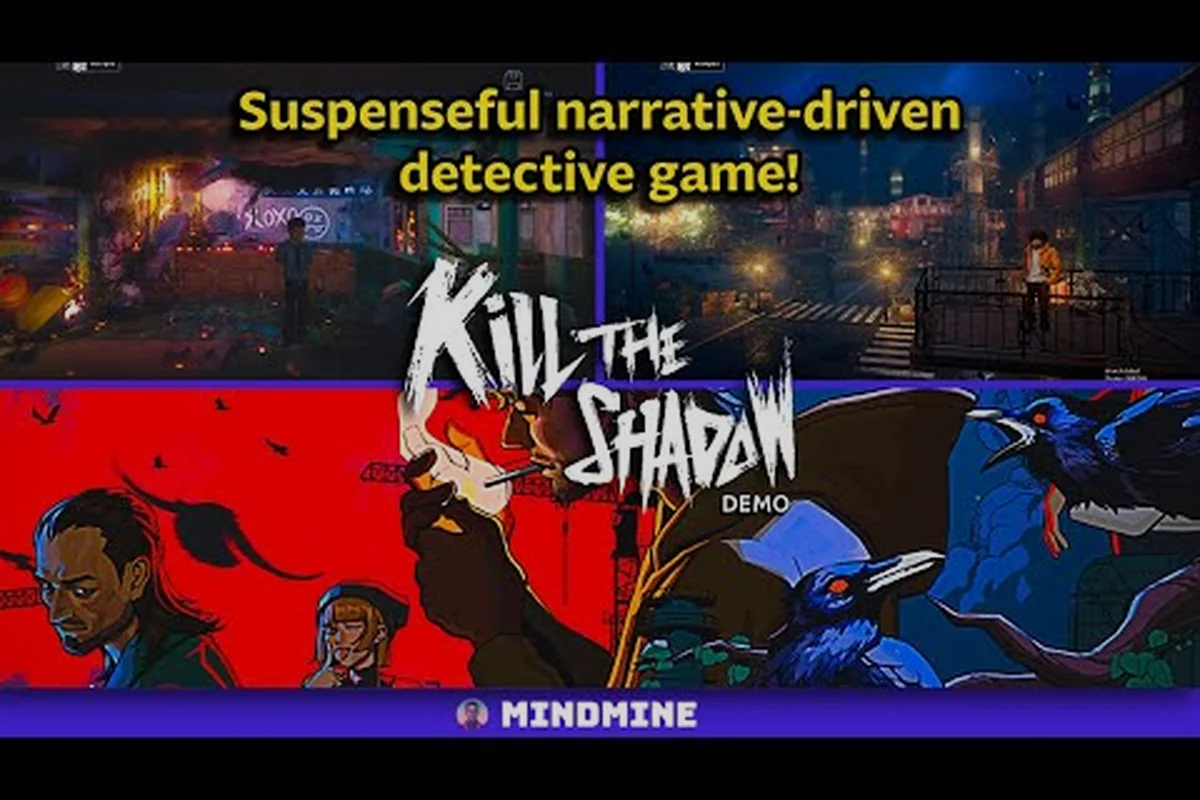
Kill The Shadow Ability System Explained: A Complete Guide
The ability system in Kill The Shadow is one of the most distinctive mechanics in this 2.5D pixel-noir detective RPG developed by Shadowlight. Set against the rain-soaked neon backdrops of Dark Tide City, the game puts you in the trench coat of protagonist Lucas, a hard-boiled investigator reluctantly bound to The Shadow — a parasitic entity that grants supernatural powers in exchange for its own mysterious agenda. Every conversation you have, every clue you pin to your corkboard, and every decision you make through the time rewind mechanic is shaped by which of the three ability paths you choose to invest in.
Whether you are trying to crack open a stubborn informant in the Pig Cage Walled City, bluff your way past corrupt cops like Captain Wang at the docks of Shipwreck Wharf, or unravel the psychic whispers The Shadow feeds you, your chosen path — Strength, Spirit, or Charm — determines not only what dialogue options appear on screen but how the entire investigation unfolds. This guide breaks down everything you need to know to make the right build decisions for your playthrough.
The Kill The Shadow Ability System: Core Mechanics
Unlike traditional RPGs where stats are abstract numbers, Kill The Shadow ties its progression system directly to player behavior. Every time Lucas interrogates a suspect, investigates a crime scene, or confronts an NPC, the game quietly tracks your stylistic preferences and awards points toward one of the three ability paths. There is no experience bar, no level-up screen, and no traditional skill tree — your build emerges organically from how you choose to play.
According to a GamingBolt interview with the Shadowlight development team, the Strength, Spirit, and Charm paths were designed to "open different investigation approaches and dialogue unlocks," giving players genuine mechanical reason to replay the campaign with a different personality. The system borrows from classic CRPG dialogue branching while filtering every interaction through a noir filter where words cut deeper than bullets.
The three paths are not mutually exclusive — you can dabble in all three — but investing heavily in one unlocks signature dialogue options that simply do not appear otherwise. NPCs respond differently based on your dominant path, and certain story branches in Dark Tide City are locked behind specific ability thresholds. This makes the early-game choices particularly important, as the system tends to snowball once a path gets ahead.
The Three Ability Paths: Strength, Spirit, and Charm
Before diving into each path's specific benefits, it helps to understand the philosophy behind the trinity. Shadowlight designed the system to mirror the three classic archetypes of detective fiction: the enforcer, the psychic, and the smooth talker. Each path feels mechanically distinct and rewards a different kind of play.
Ability Path Comparison
| Path | Core Fantasy | Primary Use | Best Against | Risk Profile |
|---|---|---|---|---|
| Strength | The enforcer who leans on people | Intimidation, breaking locks, physical evidence | Stubborn suspects, locked doors, gang members | High hostility, witnesses flee |
| Spirit | The psychic channeling The Shadow | Mind reading, supernatural sight, hidden clues | Liars, illusions, locked psychic memories | Mental strain on Lucas |
| Charm | The silver-tongued negotiator | Persuasion, seduction, social leverage | Politicians, informants, betrayers | Trust easily misplaced |
Each path also influences how The Shadow entity interacts with Lucas during story moments. A high-Spirit protagonist hears The Shadow more clearly, unlocking extra lore snippets. A high-Strength build lets you physically suppress The Shadow's more dangerous urges. A high-Charm build can talk The Shadow down from reckless decisions — a subtle but powerful mechanic that affects the ending you receive.
Strength Path: Physical Pressure and Force
The Strength path is the most direct route through Dark Tide City's criminal underworld. Lucas, fed by The Shadow's borrowed brawn, becomes capable of feats that would intimidate a bar full of dockworkers in Shipwreck Wharf. This path rewards aggressive play, and its dialogue options are short, blunt, and often threatening.
Strength Dialogue Unlocks
At various Strength thresholds, you gain access to unique conversation options such as:
-
"Sit down before I make you." — Forces seated NPCs to remain for the rest of the conversation.
-
"Talk, or I'll find someone else who will." — Skips intermediate dialogue and jumps straight to accusation scenes.
-
"I've broken harder men than you." — Available in late-game confrontations, unlocks a unique resolution with minor antagonists.
Mechanically, Strength also unlocks the ability to force open sealed locations without needing a key item, push through crowd scenes in Pig Cage Walled City, and physically inspect evidence with brute-force analysis (smashing crates, kicking down walls, etc.). These actions sometimes yield additional clues that other paths would miss, but they also damage delicate forensic evidence, occasionally locking you out of alternative solutions.
The risk of going all-in on Strength is twofold. First, NPCs you intimidate become unavailable for follow-up conversations — you cannot call Captain Wang back to the precinct if you slammed him into his desk during your first meeting. Second, The Shadow entity becomes harder to control. Strength-based moments amplify The Shadow's hunger, and late-game story branches may force you into violent conclusions you did not intend.
For players who prefer kinetic, punchy noir, however, there is no better feeling than watching a suspect's composure shatter because Lucas leaned across the table and said the right thing in the right tone. If you want a deeper dive into this path, our dedicated [/en/abilities/strength-ability-guide/] covers every Strength-specific unlock in detail.
Spirit Path: Mind Games and Psychological Manipulation
The Spirit path is the most thematically resonant choice in Kill The Shadow, because it directly engages with the supernatural core of the story. As Lucas invests in Spirit, his bond with The Shadow entity deepens, and he begins perceiving things other detectives cannot: the lingering emotions of the dead, half-formed memories hidden in objects, and the deceptions people tell themselves.
Spirit Dialogue Unlocks
Spirit-focused dialogue options include:
-
"I can see what you're hiding." — Forces NPCs into a panic state where they reveal partial truths.
-
"The dead remember more than the living." — Unlocks ghost-vision sequences at crime scenes, revealing clues invisible to the naked eye.
-
"Let me show you what I saw." — Available only to high-Spirit builds, lets you project recovered memories back to suspects to break them down.
Spirit is also the path most tightly integrated with the game's signature corkboard deduction system. While every path can use the corkboard to connect clues, a high-Spirit build unlocks psychic threads — glowing red strings that appear automatically when two clues are thematically connected, even if Lucas has not yet consciously linked them. This significantly speeds up case progression but can also lead you toward conclusions that are emotionally true rather than factually correct, a deliberate design choice that mirrors Lucas's unstable mental state.
The danger of a Spirit-heavy build is that Lucas's perception becomes unreliable. The Shadow entity begins feeding him false memories to test his resolve, and certain NPCs — most notably the street urchin informant Kiki — will flatly refuse to cooperate if they sense Lucas is reading their mind rather than listening to them. Spirit is the path of insight, but also of paranoia.
To understand how Spirit specifically feeds into the broader investigation loop, see our guide on the [/en/guides/deduction-system-explained/] system, where we detail how each ability path interacts with clue pinning and case resolution.
Charm Path: Persuasion and Social Engineering
The Charm path is the most subtle of the three, and arguably the most rewarding for players who enjoy the conversational side of detective work. Charm does not unlock supernatural vision or physical dominance — instead, it gives Lucas the rhetorical tools to turn enemies into assets, witnesses into allies, and allies into something far more complicated.
Charm Dialogue Unlocks
Charm dialogue options emphasize connection over confrontation:
-
"Tell me about your mother." — Opens personal history branches that reveal hidden motives.
-
"I think we've both been lied to." — Triggers coalition dialogue where suspects and Lucas work together against a third party.
-
"Help me understand." — A high-Charm-exclusive option that unlocks the longest, most emotionally complex conversations in the game.
Charm is uniquely powerful in Dark Tide City, where corruption runs so deep that almost everyone has something to hide and someone to blame. Captain Wang, for example, is a notoriously hard nut to crack with Strength, but a high-Charm build can convince him to share classified files from a sealed cold case. Teddy, the jazz-club owner in Pig Cage Walled City, will only reveal the location of a key witness if Lucas passes his verbal equivalent of a Turing test — a feat only achievable with mid-to-high Charm investment.
The trade-off with Charm is that it is the slowest path to develop meaningful case advantages. While Strength breaks a door in one scene and Spirit sees a clue in another, Charm builds pay off over multiple conversations, requiring patience and careful note-taking. Players who rush through dialogue trees will not see the benefits. However, Charm is the only path that consistently produces loyal informants — NPCs who will reappear in later chapters with new information, optional side cases, and even assistance during major confrontations. For a full breakdown of how The Shadow entity reacts to a Charm-dominant Lucas, read our analysis on [/en/characters/the-shadow-entity-explained/].
How Abilities Integrate with Corkboard Deduction
The corkboard deduction system is the visual heart of Kill The Shadow, and the ability paths interact with it in distinct, mechanically meaningful ways. Every clue you collect can be pinned to one of three colored boards: physical evidence (red), witness testimony (yellow), and supernatural insight (blue). Your dominant ability path influences which board fills up fastest and which deductions become available.
Corkboard Behavior by Ability Path
| Ability Path | Dominant Board Color | Unique Deduction Bonus | Hidden Risk |
|---|---|---|---|
| Strength | Red (Physical) | Can brute-force analyze crime scenes for extra clues | Destroys fragile forensic evidence |
| Spirit | Blue (Supernatural) | Psychic threads auto-link related clues | Links false memories, misleading deductions |
| Charm | Yellow (Testimony) | Witness statements gain extra context tags | Witnesses may lie to please Lucas |
This means the corkboard is not just a visualization tool — it is an extension of your build. A Strength-focused Lucas will see his red board overflow with physical clues, sometimes at the expense of the other two boards. A Spirit-focused Lucas will have a blue board dense with connections, but those connections may not all be reliable. A Charm-focused Lucas will accumulate testimony rapidly, but the reliability of those testimonies depends on how well Lucas has built trust.
Time Rewind and Ability Synergies
One of Kill The Shadow's most innovative mechanics is time rewind, which allows Lucas to revisit any conversation or scene he has already played and make a different choice. The system is not a simple retry button — it is built into the fiction as a side effect of The Shadow's influence, and it interacts directly with the ability paths.
Each path gains a unique rewind bonus that other paths cannot replicate:
-
Strength rewind bonus: "Muscle Memory" — Retained physical actions, like smashing a crate, persist across rewinds, letting you break into sealed areas once and explore them later.
-
Spirit rewind bonus: "Echo Sight" — When you rewind a Spirit scene, you see ghostly afterimages of the emotions the NPCs were hiding, even if you choose a different dialogue option.
-
Charm rewind bonus: "Persuasive Residue" — NPCs you previously convinced retain a slight trust bonus even if you rewind the conversation, making it easier to re-persuade them.
These bonuses mean that even on a single playthrough, the ability system rewards experimentation. You can rewind to test a Charm response, fall back to a Strength option if it fails, and still retain partial benefits from each attempt. This makes the time rewind system feel less like a save-scumming tool and more like a genuine noir mechanic — the idea that memory and influence linger, even when the moment has passed.
Best Builds for Different Playstyles
Choosing a build in Kill The Shadow is less about picking a "best" option and more about matching your preferred fantasy. The game is short enough — roughly 10 to 12 hours for a main playthrough — that single-path runs are viable and narratively coherent, but hybrid builds unlock the most content.
Build Recommendations by Playstyle
| Playstyle | Recommended Primary | Secondary Dip | Playstyle Notes |
|---|---|---|---|
| Classic Noir Enforcer | Strength (60%) | Spirit (25%), Charm (15%) | Lean on physical pressure, occasional supernatural insight |
| Psychic Detective | Spirit (60%) | Charm (25%), Strength (15%) | Trust the visions, charm witnesses to confirm them |
| Silver-Tongued Sleuth | Charm (60%) | Spirit (25%), Strength (15%) | Talk your way through every confrontation |
| Balanced Investigator | All three (≈33% each) | None | Unlocks the most dialogue but requires careful play |
Players chasing the canonical "Shadowlight ending" — the one the developers have hinted at most heavily — should consider a roughly even split between all three paths, since it allows access to the widest range of dialogue branches and the most nuanced relationship with The Shadow entity. Players who want a particular thematic experience — say, a brutal interrogation of Captain Wang, or a tender conversation with Kiki where Lucas confesses his own secrets — will want to lean harder into one path.
Ultimately, the ability system is what gives Kill The Shadow its identity. Beneath the gorgeous pixel art and moody soundtrack, it is the system that decides whether you are the kind of detective who kicks down doors, reads minds, or talks the devil himself into a confession. Choose wisely — Dark Tide City does not give second chances, except when The Shadow says it does.
For more details, check out our Deduction System Explained guide.
For more details, check out our The Shadow Entity Explained guide.
For more details, check out our Strength Ability Guide guide.
Ability System FAQ
Can you respec or change ability paths in Kill The Shadow?
No, there is no formal respec system in Kill The Shadow. However, the time rewind mechanic allows you to revisit earlier conversations and reroute points into a different path, effectively rebuilding your character over the course of a single playthrough without restarting the game.
Which ability path is best for beginners?
Charm is widely considered the most beginner-friendly path because it unlocks the most cooperative NPCs and produces the gentlest difficulty curve. Spirit is the most complex, requiring careful interpretation of supernatural clues, while Strength is mechanically simple but socially punishing.
Does ability choice affect the ending of Kill The Shadow?
Yes, significantly. Each path has a unique climactic scene with The Shadow entity, and your dominant ability influences which ending you receive. Spirit-heavy builds tend toward revelations, Charm-heavy builds tend toward resolution, and Strength-heavy builds tend toward violent confrontation.
How long does it take to fully develop one ability path?
Most players reach a fully developed single path after roughly 6 to 8 hours of focused play, depending on how many side conversations they pursue. Hybrid builds develop more slowly but unlock a broader range of dialogue options across the campaign.
Are some NPCs locked behind specific ability paths?
Yes. Certain informants and story branches, including one involving Teddy in Pig Cage Walled City and another involving Captain Wang at Shipwreck Wharf, are only accessible through specific ability thresholds. To experience the full game, Shadowlight recommends at least one Charm-focused and one Spirit-focused playthrough.